You could say that a large number of populist movements throughout history have arisen from very similar conditions and narratives — and that holds true of current fascist movements around the globe. These shared conditions and narratives include:
Enduring and increasing economic inequality and lack of economic mobility.
Anxiety over a perceived loss of status and influence among groups who formerly considered themselves to be among society’s more privileged.
Frustration with the status quo, and mistrust of existing methods of remedy, equalization, and empowerment (i.e. government, civic institutions, political leadership, democratic elections, etc.).
Deteriorating economic conditions — or fears about deteriorating economic conditions.
Deep mistrust — usually racist at its core — about outsiders polluting or corrupting an otherwise “pure and good” society.
What makes fascism unique in its response to these common factors is that fascist movements tend to make fundamental errors about the underlying causes of these undesirable conditions and narratives. For example, fascism tends to blame a particular group in society — such as immigrants, or a “corrupt elite,” or certain racial, religious, or political groups — for all undesirable conditions and felt realities, without establishing a factual bases for those accusations. But the false narratives are extremely effective in uniting angry adherents in an “Us vs. Them” influence campaign of nationalistic and often religious fervor. Historically this can spread like wildfire across society without mass media, but today mass media and especially social media effectively fan those flames and accelerate the spread of fascist ideology.
It should be noted that fascism has never been spontaneous — it is carefully cultivated through disinformation and emotional appeals. Yes, the conditions (the frustrations, the inequity, the dissatisfaction, the fears) are real, but they are manipulated with carefully crafted misleading narratives and false promises to empower opportunistic leaders.
There is also usually a central leadership figure — often a pedantic strongman gifted in hateful rhetoric — offering themselves as the “only solution” to society’s woes, and constantly keeping folks angry, fearful, and motivated. These fascists leaders have nearly always promoted overly simplified solutions to complex problems, and successfully vilified certain members of society as scapegoats to take the blame.
We see all of this being replicated around the world today in various movements — and in the style and rhetoric of what are most often populist far-right political leaders. In the U.S., the strongest fascist tendencies were traditionally held by white supremacist groups, but we have now seen those tendencies infect and overtake the Christian nationalism in the MAGA movement as well.
I hope this was helpful. Here are some links to explore this topic further:
This is an interesting question, and yes, there are a lot of examples of this occurring. One that springs to mind is the devolution of classical liberalism. Concepts of “liberty” and “fee markets” championed by proponents of classical liberalism in the 17th and 18th centuries were initially dependent on a strong civil society, but became more and more distorted and disconnected from that prerequisite over time. By the late 18th thorugh early 20th centuries, the initial ideas of a strong civil society with “good government” (Adam Smith) as a counterbalance to corporate malfeasance, capture of government by the wealthy, and abuse and exploitation of workers were completely abandoned by those claiming to be the disciples of classical liberalism (such as the authors of the “Austrian School”). By the time Milton Friedman and the Chicago School came into vogue, the wanton abandon for individualistic enrichment and empowerment had completely discarded any concerns at all for civil society, and actually encouraged corporate capture of government and other characteristics of crony capitalism in order to amplify self-enrichment. Randian objectivism then just added fuel to the same solipsistic fire. “Laissez faire” evolved into a sort of joke that every credible economist and social scientist understood to be a toxic delusion. This is how we arrived at what we call “neoliberalism” today.
There are many other examples of this sort of bizarre distortion of first principles in favor of grossly self-serving and destructive “opposites” — often ones that somehow retain the same name. Christianity is a potent poster child. Democracy is another. Hegelian dialectics, Existentialism, concepts of patriotism and nationalism…there seem to have been many such flip-flops over the years, where what was claimed to arise out of certain concepts, practices, and ideals ended up representing countervailing antagonism to those very same original principles. This seems to have been a very common pattern throughout human history, alas.
So a guy goes to a car dealership, and the salesman convinces him that this one car he’s interested in gets 50 mpg, does 0–60 in 4 seconds, and has a 5-year worry-free warranty. The dealership has one in a sweet metallic red, and so the guy buys it. He loves the car. Shows if off to his friends. Sometimes he just drives it around town for no other reason than because he’s enjoying driving it so much. But pretty soon he realizes that the salesman was…let’s say not quite telling the truth about the car. It only gets 15 mpg. It does 0–60 in about 7 seconds. And when the fuel pump quits after just two months…it turns out the “worry free” warranty doesn’t cover that (or much else that is likely to fail on the vehicle). The thing is, though, he still really loves the car. He’s willing to deal with all the problems because he still enjoys the pure pleasure of driving it around. Even after the dash instruments start failing one by one. Even after the timing belt breaks after 50K miles and the engine requires a total rebuild. Even after the chrome flakes off of all the detail work. Even after the squeaks all around the car get so loud that he can’t drown them out anymore with the car’s underpowered stereo system. This has been a pretty a common American experience. And the thing is, getting angry at politicians or one political party isn’t going to fix this situation - because it has nothing to do with them. The guy should have done his research. He should have listened to some friends who told him to avoid this particular brand of car. He should have been more careful and thoughtful and maybe not believed a salesman who just wanted to make a quick buck. But he didn’t. And he has no one to blame but himself. But…instead of owning up to his mistakes and admitting he was hoodwinked, the guy is furious with anyone who points out he was deceived, or corrects him for trying to blame his bad choices on “government regulation,” or tries to explain that the problems with his car really have nothing to do with unions, but instead were decisions made in corporate board rooms so that shareholders could line their pockets with just a little more profit. But the really sad thing is that, when the car finally breaks down completely after 100K miles, guess where this guy goes to buy another? The same dealership? The same salesman? A later model of the same shitty car…? No way! He’s finally “wised up” and gone to the competing dealership across the street, where the salesman welcomes him with open arms and convinces him to buy the latest model of THAT brand…which gets 50 mpg, does 0–60 in 4 seconds, and has a 5-year worry-free warranty (all of this isn’t true, just as it wasn’t the last time, but he doesn’t check the facts…). And so he buys the car - without doing the research, or listening to his friends, or questioning whether the salesman is telling the truth. And as he drives away, he shakes his fist out the car window at the dealership where he bought his first car, yelling “This is my ‘fuck you’ PROTEST VOTE!” So…really, what’s the point of trying to listen to the concerns of such a mindless, irrational consumer who is so easily and perpetually hoodwinked by lies and deceptions? I mean, really it’s on him to recognize his own mistakes, and to take responsibility for all the bad stuff that has happened to him. And until he takes responsibility and stops blaming others for his problems…well, things are not going to change. Not for him, and not for anyone else like him in America.
Thank you for the question. Here are what I believe are some contributing factors that have gained increasing prominence in the past couple of decades:
1. A deliberate, carefully planned effort on the part of political activists, think tanks, and corporate media to divide, polarize, and demonize across the political spectrum in order to secure votes, increase campaign contributions and media viewership, and secure political status. It is much easier to appeal to fear and anxiety, play the blame game, and energize “Us vs. Them” polemics than to thoughtfully explore nuanced political philosophy and policy positions.
2. A downward spiral of biased media reporting that was instigated by ending the Fairness Doctrine in 1987. As a consequence of that very ill-informed decision, consumers of news media are simply often not presented both sides of the argument on political issues in any meaningful or reasonable way.
3. Social media echo chambers, the illusory truth effect, and consequent groupthink. When algorithms and like-minded groups of users amplify extreme, biased, and often false information that confirms their worst fear and mistrust, there is no longer room for discussion. Political topics become too highly charged with emotional rhetoric to allow moderating (or even true) viewpoints.
4. An unfortunate dumbing down of the U.S. voting public. There are likely a lot of factors contributing to this — poor nutrition, increased collective stress and anxiety, incomplete education, epidemic levels of ADHD, cultural opposition to “intellectualism,” etc. — but it is increasingly obvious that a lot of folks cannot reason critically at all, and instead quickly race down a rabbit hole of logical fallacies and contradictory assumptions.
5. Overwhelming input streams that folks often just don’t know how to manage, leading to feeling paralyzed, confused, and consequently more vulnerable to the influencing factors listed above. For example: way too much information funneled at all of us 24/7 from all directions at once; increasing complexity in nearly every decision we need to make; equally increasing pressure to make important decisions at much higher quantities and at much faster rates than many previous generations; accelerating technological and cultural changes that are increasingly difficult to track, let alone accept or fully incorporate on cultural and interpersonal levels.
6. A consumerist culture than encourages us to “bandwagon.” We are conditioned from early childhood to be guided by advertising and cultural norms that basically say “Hey, you don’t need to have your own agency or be thoughtfully informed, instead you just need to buy this or that and we’ll solve all your problems for you.” This conditioning runs so deep in U.S. culture that many folks simply conform to the latest cultural fads — which often originate at the fringe extremes of the political spectrum — in order to feel a sense of belonging and empowerment.
7. State-funded disinformation from hostile foreign actors that takes advantage of all-of-the-above and makes them much worse to serve the agendas of that country.
When very large and powerful government institutions are not held accountable by a functional democracy, then those institutions will certainly run amok over the citizenry and compromise other freedoms and rights in civil society — including the right to vote. This has tended to happen either where citizens are apathetic about their participation in the democratic process (as has been the case in the U.S.A. for many decades), or in places where a populist strongman deliberately consolidates their own power and undermines democracy itself (as has been the case of late in places like Turkey, Russia, Hungary, India, and multiple nations in Africa and Latin America).
But if the democratic institutions and public participation in democracy are strong, and authoritarian/autocratic leaders are voted out of office before they can wreak substantial damage on civil society, then the size of the government is not relevant, IMO. In the U.S.A., where the government is very large, Trump’s elevation to POTUS definitely woke up the country in terms of stimulating a more passionate participation in democracy…and his being voted out after one term likely saved U.S. democracy. But the size of the U.S. government did not really play into these variables.
What is much more critical in the preservation of democracy is carefully mitigating large concentrations of wealth and power and their impact on democratic institutions. The greatest erosion of democracy in the U.S. can easily be laid at the feet of the largest corporations, corporate media organizations, and wealthy campaign contributors. Their level of interference with functional democracy in the U.S. is truly astonishing — and it’s getting worse. To appreciate how organized and extensive this interference is, take a look into the history of American neoliberalism, which has relentlessly and systematically sought to consolidate wealth and power in the hands of as few people as possible (see link below), and effectively crippled democracy in the process.
No, the tyranny of the majority is not an unavoidable weakness of democracy. In fact there are so many welll-practiced and time-proven ways to effectively diffuse and countervail this possibility that its ascendence is really the exception rather than the norm.
Successful mitigation includes things like:
1. Implementing subsidiarity, so that democratic decisions are diffused down to the community level. At the same time avoiding concentrations of centralized political and economic power becomes a critical countervailing strategy.
2. Ensuring the electorate is well-educated about its responsibility to govern for the good of everyone in society, and is operating at a level of moral maturity that reflexively supports and enhances this view.
3. Strengthening egalitarian rule of law, and egalitarian civil society generally, to support an equality of rights, opportunity, ability, and enforcement across society — all of which inherently aim to compensate for existing inequalities and at least attempt to level the playing field.
4. Institute truly independent checks and balances to ensure no single institution, governing body, or system has absolute authority over any aspect of society. Interestingly, one way to accomplish this is by implementing direct democratic controls over representative bodies as some constitutions allow.
Sadly, what has become much more problematic is the “tyranny of the minority,” where a smaller group that has gathered an inordinate amount of economic and political power to itself runs roughshod over democracy and civil society to maintain its own privilege, influence, and wealth.
This question seems focused around whether folks have equal rights when they have different resources. And yes of course in practice the haves and have-nots are not really equal “under the law” or in many other contexts. Some examples:
1. Your million dollars can buy you an excellent lawyer, whereas my lack thereof may mean I must rely on an overworked and underpaid pubic defender. Any reasonable and observant person knows that many innocent poor people go to jail simply because they do not have a competent defense, whereas many rich people avoid court judgements altogether because they have excellent and expensive attorneys. In addition, due to how cash bail laws work in reality in the U.S., a poor person is often not able to post cash bail, and thus loses their job because they remain absent from work (and then their housing after that, etc.) before they have even gone to trial. In essence, then, a poor person is often punished as “guilty” with pretrial incarceration, where a rich person is not. That is certainly not “equality under the law.”
2. If circumstances beyond my control (natural disasters, pandemics, economic downturns, a physical disability, a sudden illness, etc.) cause me to lose my job and become homeless, my choices will be very limited if I don’t have someone to advocate for me or help me with my situation. Statistically, I am very likely to remain homeless, jobless and/or sick. You, on the other hand, can much more easily relocate, stay in a hotel, buy a new home outright, get the healthcare you need, and so on. You have a much greater probability of recovering or adapting — much more easily than me. But the point is that “under the law” we may appear to have equal opportunity to rent or own a home, or be protected in some way from further calamity, yet in reality we really don’t.
3. If you start a family and end up with a special needs child, that million dollars will come in very handy in assisting your child with special education, custom equipment, therapies, and so on, so that they may actually be able to become functional and independent over time. If my family suffers the same challenges, the likelihood that my child will gain the same level of independence and function is (statistically and realistically) much lower. Once again, “under the law” both of our children may have a right to equal levels of education or healthcare…but in reality your child will effectively have “more rights.”
I could go on, but these examples will hopefully shed light on the reality that a paucity of personal resources has very clear negative impacts on personal liberty, and an abundance of personal resources has very clear positive impacts, even under laws designed to treat them equally. To believe otherwise is the result of either ignorance of the realities of being poor, or ideological convictions that also have no basis in fact.
My 2 cents.
Question from John Anderson:
I am decidedly in the “poor person” category. I have also been on the losing end of a court case against a wealthy person. I am not blind to the advantage of having wealth, especially as it applies to the ability to hire better lawyers. That doesn’t change my view on the nature of my equality under the law with that person. I had as much right as he did to hire better lawyers even if I hadn’t the ability. The fact I could not afford to do so is not proof of a lack of the right to do so. Both he and I had to make our case before the judge. The very fact that we both did so is in fact proof (in my mind, anyway) that we were both equal under the law. I was not barred from appearing before the judge to argue my case. There was no assumption of guilt for me, nor prohibition against making whatever arguments I could to defend my position. And of course, like everyone who goes before the judge, I thought my position just and his unjust, and felt wronged by the judge’s decision. I also admit that the other man felt every bit as justified in his position as I did, and was gratified that the judge ruled with him. Our sense of justice is often subjective.
I can’t afford to purchase a new house on the beach, but I have the right to do so. No law forbids me from doing so or permits only those with a certain level of wealth to do so. I can’t act well enough to be the next Batman, but I have the right to do so. No law forbids me or allows only actors of a certain ability. I can’t run fast enough, catch well enough, etc. to play in the upcoming Superbowl, but I have the right to do so. No law forbids me from doing so or permits only those with a minimum physique, etc. If I wanted to, I could take acting lessons, I could hit the gym, I could invest wisely, and gain the skills to be the next Batman, or the muscle to be the Superbowl MVP, or the wealth to buy that beach house. There is no law that forbids from doing any of those -I am limited only by my current bank accounts, skills, fitness.
Wealth, like skill, good looks, physical strength and intelligence, conveys advantages or privileges, not rights. Beauty, physical stature and abilities, natural intelligence, aptitude and ingenuity, are all often inherited from our parents. Why shouldn’t wealth be, if they have it to give? Who has the right to decide how to dispose of their wealth?
You argue your point very well! And I do appreciate the distinction between “ability” and “availability” that you are making. If rights are only meant to convey equivalent “availability” rather than equivalent “ability,” then my side of this argument has no merit.
Except protected rights ARE also meant to convey equivalent ability, and not just the same availability. We are not talking about sports, or fame, or in fact the earning of wealth itself — all of which could fairly fall within the “ability” framework of your argument. We are instead talking about equality under the law, which has always expressly implied more than just equal “availability.” Some examples:
1. If I can’t afford an attorney, one will be appointed on my behalf. Why? Using your argument, I should be able to bone up on the law and defend myself, or take out a loan against my house to hire a good attorney, etc. Right? Except that’s not a realistic expectation, and so public defenders have been part of proposed equal ABILITY of an adequate self-defense. These attorneys would not exist if equivalent ability was not part of the equation of equal justice.
2. In the same way, a variety of special protections exist under the law for the disabled, children, the elderly, and so forth. Why? If these individuals are expected to somehow rise to the occasion when given the same “availability” of their protected rights — regardless of their objective abilities (or lack thereof) — why should they receive any special treatment at all? Because part of equal rights under the law is to attempt (successfully or not) to level the playing field with respect to one’s ability to execute or achieve those rights.
3. In an admittedly extreme extension of logic, if I am accused of vehicular homicide but subsequently end up in a coma from a brain aneurysm, according to your reasoning I should be tried in absentia for my crimes. It’s not the court’s fault (or the victim’s family’s fault, or society’s fault) that I can’t stand trial. Justice must be served. Except, as I’m sure you would agree, I must be “competent to stand trial” before that trial can proceed. Ergo: I must have adequate “ability” to answer for my alleged crime.
So, to put a very fine point on it, in any court of law, if my advantage in ability is extraordinary, and my opponent has profound deficits in their ability, there is not going to be anything close to “equality under the law” unless a judge makes special provisions on my opponent’s behalf, or both parties are forced into one of many leveling processes (such as mitigation, expedited jury trials, etc.). This is a well-known problem with many imperfect solutions. And, unfortunately, a hefty wallet can almost always find ways around these leveling approaches.
In reality, corporate officers of corporations who have knowingly killed tens of thousands of people through deliberate malfeasance (tobacco, pharmaceutical, and petrochemical industries for example) have never been held accountable for their genocidal profit campaigns. But innocent people who can’t afford a good defense have ended up on death row with alarming frequency. So anyone sincerely concerned with justice must ask: “Why is this so?”
Well…it’s for precisely the same reason that the wealthiest corporations often pay little to no taxes: they can afford the expertise to skirt “equality under tax law” and tilt the scales in their favor.
Sadly, almost nothing. I’m not talking about the values that conservatives espouse — such as the importance of family and personal responsibility, the importance of the rule of law and being fiscally responsible, the valuing of the U.S. Constitution and expectations of personal liberty, etc. — many of which I myself agree with. No, the real problem is how conservatives allow themselves to be hoodwinked into believing utterly false claims about causality and therefore into promoting policies and praxis resulting in outcomes that completely undermine and contradict the values they espouse.
Take the example of abortion. Reducing the frequency of abortions seems like a good thing to almost everyone, regardless of where they are in the ideological or political spectrum. The problem is that the conservative approach — to overturn Roe v. Wade and, ultimately, to ban abortions altogether — simply isn’t effective. In fact, decades of data demonstrate that communities where Planned Parenthood has a long-term presence have evidenced a steady reduction in total abortions over time…even as populations in those areas grow…so that per capita abortions steeply decline. So this “liberal/progressive” approach to reducing abortions actually works, even though it flies in the face of conservative claims about “how liberals just want to kill more babies,” or that Planned Parenthood is an evil emblem of this baby-killing frenzy. And we know that, historically, women will still seek abortions whether they are legal or not. Lastly, SCOTUS overturning Roe v. Wade in the way that it did essentially threatens several longstanding protections of personal liberties (gay marriage, mixed race marriage, parental decision-making, right to contraception, etc.). So despite the rhetorical “virtue signaling” of the abortion bans we see being legislated in conservative states, real-world evidence and outcomes tend to contradict what conservatives claim the root of the problem to be, and their solutions undermine the very personal liberty conservatives claim to support!
And this is true across the board — in the flavor of crony shareholder capitalism that conservative policies promote, in the level of government corruption and law-breaking that politicians elected by conservatives carry out, in the failure of conservative economic policies, in their persistant undermining of democratic institutions, etc. The way conservatives go about reifying their values nearly always either falls short or makes things much worse — often smacking of hypocrisy and invoking high levels of cognitive dissonance within the conservative tribe. Thus conservatives seem to demonstrate a really terrible track record in areas where they are constantly accusing or attacking liberals and progressives. And this hypocritical spiral has extended all the way up to conservative Supreme Court Justices, who are shamelessly “activist” in their revision of 200 years of stare decisis (yet only regarding conservative hot-button issues, and little else). It’s more than a little astonishing.
Why does this happen with such frequency? Why are conservatives so often mistaken? Well…because the folks who work very hard (and spend lots of money) hoodwinking conservatives are benefitting from the false narratives about causality and preferred policy approaches.
Let’s look at just one potent example that spells this out really clearly. Consider that firearms manufacturers — via intense lobbying, funding of pro-gun candidates, generation of endless Second Amendment propaganda and fear-mongering, and long-term intimate relationships with “gun rights” organizations — have been very successful in persuading conservatives that civilians “need” to own lots of weapons, including military weapons. According to gun makers, owning a military weapon is a Constitutional right that is constantly under threat from gun-fearing libtards and the nanny state! But wait…who is this really benefiting from these endless and well-funded persuasion efforts? Well the firearms manufacturers of course! All that propaganda and lobbying directly increases firearm manufacturer profits in a world where starting wars that enlist mass armies has become much less popular, and the sale of military weapons to such armies has consequently become much less profitable. Gun manufacturers just needed to find a new market…and by hoodwinking conservatives, they did just that.
And this is how almost all conservative groupthink is generated…and how the conservative voting base is “energized:” it’s mostly just simple hoodwinking for profit. When we follow the money behind any conservative propaganda, it always leads to folks who want to enrich themselves directly — or empower themselves politically so that they can further enrich themselves.
REFERENCES/FURTHER READING
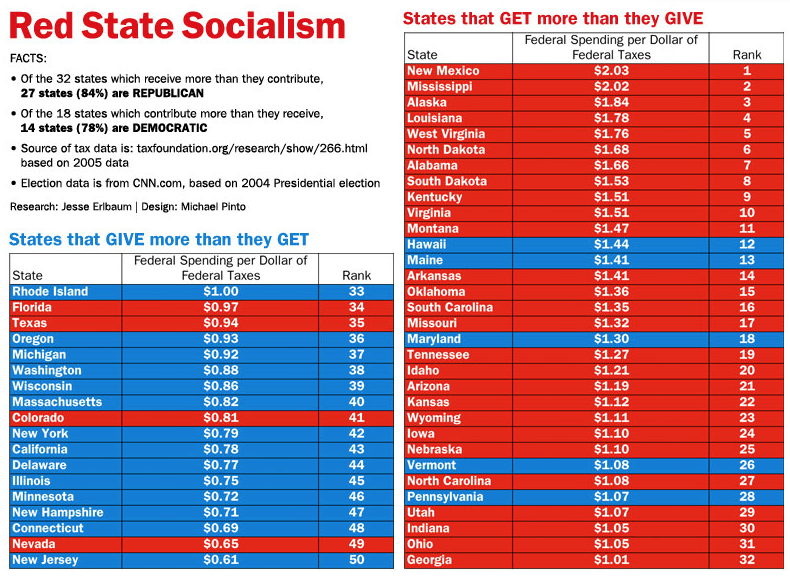
Some additional examples of conservative hypocrisy illustrated below from this website: www.realmajority.us
You’ll notice there isn’t one simple answer…but unfortunately that’s what a lot of folks would like — and certainly what political pundits and talkshow hosts are willing to sell us.
Recent causes for inflation in the U.S. — really none of which can be “blamed” on any one political party or candidate — include:
1) Government stimulus spending during the COVID pandemic. This put more $$ in people’s hands to spend and many of them did.
2) Reluctance of Federal Reserve to address inflation sooner. Many influential economists (and folks in Fed itself) believed initial spikes of inflation were “transitory.” But they were wrong.
3) Russian aggression against Ukraine and consequent sanctions. The war itself was hugely disruptive to supplies of everything from oil and natural gas to grain, palladium (used in fuel cells and catalytic converters) and potash (a component of fertilizer production) — and the sanctions levied against Russia then amplified this effect.
4) Supply chain and transport problems around the globe. In addition to the war in Ukraine, a lot of this of this was COVID-related on a global scale, but some of it was also more localized. For example, there were oil refinery problems in the U.S. that added to oil production woes, a particular region of China that couldn’t produce microchips for several months, etc. Regardless, even as demand ramped up, supply chains remained choked…and many of those conditions continue to persist.
5) Pent up demand during COVID. This is actually a biggie, because that pent up demand is still in play — folks are still spending gobs of $$$ on things they couldn’t do during the pandemic, like travel and eating out.
6) Conspiracy thinking. This is actually a pretty nasty feature of U.S. culture that is really hurting the U.S. economy. As just one example, the resistance to COVID vaccination was really, really stupid and probably prolonged the negative economic impacts of COVID on the U.S. economy — and extended all COVID-related inflationary factors — for many more months than necessary.
7) Global economic shifts and expanding excessive consumption. Some twenty years ago the U.S. was able to source really cheap labor and raw materials from developing countries like China, Korea, India, etc. This resulted in much cheaper prices for U.S. consumers. But, as a consequence, Americans who make up only 5% of the global population were using some 50% of global resources. But now, the economies of the developing world have grown tremendously, and billions of their citizens are now much wealthier and expect a higher standard of living — along with higher wages. And of course those new consumers now have need of those same resources that were previously dedicated to supplying goods to Americans. Add to this that, globally, those raw materials are becoming more scarce even as demand for them grows around the globe. So…do you see the problem here? Americans can no longer expect cheap goods from China in particular the way they once did…so prices would have risen in the U.S. regardless of any of the other factors listed here. And the cost of doing business in the U.S. is just rising…period. Developing countries aren’t even willing to buy our garbage anymore! So guess who has to pay more for dealing with that garbage? We do.
Anti-immigrant policies and sentiment in the U.S.. This is actually one of the dumbest “let’s shoot ourselves in the foot” developments in American politics. Blaming immigrants for our problems isn’t just mistaken, it’s really harmful to the U.S. economy. Particularly in agriculture, the U.S. relies almost entirely on immigrant workers to keep Americans fed…and big ag really has never cared if those workers were legal or not. So when politicians amplify fear over a “crisis at the border” and enact policies that keep immigrants from supplying U.S. companies with much-needed cheap labor, guess who pays the price? American consumers of course.
9) OPEC oil production policies. On the heals of oil sanctions against Russia, OPEC’s decision to cut back production was a really, really bad idea — basically a “punch in the gut” to the global economy at the worst possible time.
10) Corporate greed. This includes things like reluctance of banks to pass on increased interest rates to consumers. You may have noticed that mortgage lenders are happy to charge 7%+ on 30-year mortgages, but savings accounts in banks are still only providing less than an unchanged 1% interest. Then you have oil companies raking in ridiculously high profits (the highest in their entire history!) just because they can. This level of greed has plagued corporate America for a long time, but it seems particularly bad right now. And of course it’s not restricted to the U.S. And all of this opportunistic greed is what’s helping make prices on everything very high…and likely will keep those prices from going down even when all of the other inflationary pressures are relieved.
11) Labor shortages and consequent increases in salary. This has been falsely blamed on COVID stimulus and folks choosing not to work because they were receiving COVID relief and unemployment benefits. In reality, this is a much more complicated situation that involves a host of factors — things like folks leaving the workforce due to burnout (especially among what we discovered to be “essential workers” during COVID), early retirement, a sea change in attitudes about work commitment (i.e. “the great resignation” and other gen z attitude shifts), worker deaths and disability from COVID, and major career path shifts due to COVID impacts on certain industries (for example, restaurant workers who were laid off during COVID choosing new careers).
12) Some unfortunately timed fulfillments of campaign promises. On one side, student loan forgiveness could likely become an inflation stimulator if those are allowed to proceed. On the other side, any and all tax cuts have almost certainly helped induce inflation. Here we really can blame the politicians on both the Left and the Right…even though they are just following through on their campaign promises to voters.
13) Financial “psychologics” that are disconnected from reality. This is more subtle, but the U.S. stock market is a very good example. As a consequence of both institutional “build it and they will come” optimism and a huge spike in irrationally exuberant retail investors, the stock market has almost zero correlation with real-world economic indicators. This has been a long-term problem for sure, but essentially the opportunity to make a lot of money in speculative investing, which in turn supercharges valuation and reduces perceived risk, leads to everyone (consumers, corporations, government agencies, etc.) operating as if everything is golden and wonderful…when really the Emperor isn’t wearing any clothes (or is wearing moldy rags…!). This false optimism and misplaced enthusiasm actually places a lot of upward pressure on everything from consumer prices to worker salaries, even as it encourages company’s to spend gobs of money because, well, they falsely believe in their own inflated valuation. It’s a pretty nasty cycle!
There are additional factors (after I finished writing this post I realized several more that should have been included) but this captures some pretty substantive issues. And, as you can see, we can’t really pin things on any one thing. It’s complicated. And we certainly can’t blame any one party or individual political leaders for inflation. That’s just a really ignorant knee-jerk response out fear and frustration.
It’s difficult to summarize just how extensive the impacts of consumerism on the individual and society are. I think the easiest way to begin that conversation is to list some semantic containers that encompass negative aspects of consumerism. Three of the most well-defined containers are economic materialism, conspicuous consumption, and commodification. Here is a brief overview of each:
In essence, these three habits alone contribute to an accelerating amplification of deleterious “non-material” impacts on the individual and society, which include:
1. The general devaluing of human trust relationships in favor of transactional relationships — in other words, the eroding of interpersonal trust and, by extension, community and societal trust. This of course expands into regional, national, and international attitudes and practices as well, so that we come to rely solely on transactional evidence of trust, rather than a more cultural cooperation, interdependence, and exchange.
2. The “externalization” of all personal and collective priorities, growth, meaning, and power, rather than development of internal qualities. For example, the belief that one’s possessions, material wealth, and physical characteristics are more important in attracting friends and romantic partners than internal qualities like honesty, compassion, empathy, generosity, and so forth. Or that one’s self-worth is likewise dependent on consuming and owning material things, rather than on the qualities of one’s own character. Or that social status and popularity propelled by such externals are more important than the quality and depth of our interpersonal relationships (that is, the shared feelings of connection and commitment our friendships evoke). This externalizing attitude is then expanded to include all of society and our national identity: instead of demonstrating good citizenship (in our community, or as a nation in global affairs) we become more concerned with clawing after power, status, and control, as those are our “external” proofs of success in the world…rather than the quality of relationship our nation has with other nations.
3. The overall cheapening of human life and disrespect for our fellow human beings — or anything in life that doesn’t achieve sufficient “exchange value.” This is perhaps the most egregious impact of consumerism, when our prioritization of acquiring material things, reliance on consumption for social status, and projection of material valuation and standards on others erodes our fundamental respect and compassion for others and any valuations of the intangible benefits of being live. Consider that commodification intentionally erases the constructive societal value of everything in favor of its “exchange” value in the marketplace — what better way is there to cheapen and denigrate the intrinsic value of everything in life (art, love, joy, intimacy, humanity, compassion, etc.) than to force everything into tidy, sterile boxes of monetary valuation? Paul Piff at UC Berkeley has done some interesting research related to this, documenting the negative impact of personal wealth on prosocial behaviors.
4. An undermining of happiness as individuals and society as a whole. The vast majority of long-term research in this arena has demonstrated that enduring happiness does not rely on consuming or possessing material things. Instead, happiness is primarily dependent on strong interpersonal bonds with other people — and the deepening trust, intimacy, and contentment this produces. Consuming things does stimulate short bursts of dopamine, but not oxytocin, which loving human relationships stimulate. Interestingly, healthy oxytocin levels actually reduce our need to consume calories. Perhaps it also reduces our “need” to consume other material things….?
5. Interference with spiritual, emotional, and moral development (again as individuals and society as a whole). This is a more subtle principle, and I can only speak from personal observation and experience on this matter. A materialism-consumerism orientation to the world will reliably retard our spiritual, emotional, and moral growth, keeping us “infantilized” and forever dependent. This is really an extension of the “externalization” principle alluded to earlier, but with a much more insidious and profound impact. I think this is why nearly every spiritual tradition encourages relinquishing our acquisitiveness and our trust in material possessions for any sense of self-worth or existential security. If we can’t learn to “let go” of our need to acquire and possess stuff, we will never cultivate the internal growth necessary to be spiritually, emotionally, and morally mature. Why? The mechanisms become intuitively obvious to anyone who has practiced such “letting go” with persistent discipline, but I would equate the process to a child’s individuating from their parents. There is a quality of interior self-sufficiency and an independence of will that is unattainable if we remain attached to material things. We simply cannot become mature adults if we are forever suckling at the teat of consumerism.
Some additional reading related to this topic, in no particular order:
Freedom is a type of cultural currency — a coin with two sides.
On one side of the coin is insulation from economic insecurity, acute lack of opportunity, and deprivation of social capital. I call this “freedom from poverty,” where poverty comes in many forms but always has the same effect: it robs us of the operational capacity to exercise most freedoms, and interferes mightily with exercising liberty. Another way to describe this is for everyone in society to be provided the same existential foundations and available choices — a level playing field across many dimensions of life that liberates us from being oppressed and restricted in real terms.
The other side of the liberty coin is collective agreement to support the liberty of others, regardless of who those others are and whether they are “just like me.” This equates a high level of tolerance and acceptance of differences between people. However, the presumption is that many core values are shared across all differences, so that this collective agreement is not too onerous, distasteful, or amoral. We agree to operate a certain way as a society so that everyone else’s freedoms are maximized. This is the basis of the rule of law.
Good government’s role is to facilitate both sides of the freedom coin when society is not able to do so on its own. When societies are culturally immature — as is the case with the U.S.A where I live — they require a bit more involvement from government to create both freedom from poverty and an effective rule of law. When the citizenry is morally immature and generally ignorant, government intervenes to create “civil society” by bolstering these two arenas. Over time, as societies mature into a more morally advanced arrangement and all citizens acquire broader foundations of knowledge, government’s role can attenuate as both sides of the liberty coin become the de facto reality of cultural practices and standards; that is, civil society can be supported increasingly by perversive culture rather than by government.
The common denominator for all such arrangements is progressive democracy, where citizens have increasingly direct control over how both freedom from poverty and the rule of law are implemented in their community, region, and nation. Democracy becomes a sort of banking system that stores up and protects this wealth of liberty and regulates how it is exchanged and shared within society. But again, democracy can only be effective in this regard when citizens are maturing morally and accumulating sound knowledge.
How to effectively encourage, fortify, and enhance the moral creativity of society so that our “freedom coin” is actually increasing in value has been a long-term aim of my research and writing. For more on this and all-of-the-above, please see the resources below.
His conclusion covered in that post, however, is this: “Yet possibly these objections are to a great extent met by our old answer, that if the people are not utterly degraded, although individually they may be worse judges than those who have special knowledge — as a body they are as good or better.”
It’s tentative, but this is really the basis for a functional democracy. In the same vein, Thomas Jefferson famously said: "An educated citizenry is a vital requisite for our survival as a free people," which is really a variation on the same themes that Aristotle opines about regarding democracy.
The greatest argument against democracy, therefore, is an ignorant and ‘utterly degraded’ electorate. And, unfortunately, we have seen strong evidence of this in far-right populism around the globe, rather profoundly in the MAGA movement in the U.S., and in the blindly unquestioning support of murderous dictators like Putin by a majority (roughly 70%) of the Russian people. We are living through a period where exactly what Aristotle and Jefferson warned us about is taking place.
My 2 cents.
Comment from David Daniel
"Very educational. But it doesn't really address my question. What is the argument against democracy? Is there one to be had? It is obvious to me that our current democracy has been degraded in a way that Aristotle predicted but is this, in itself, an adequate argument against undertaking the project of democracy.?
I suppose it can be said that many have predicted the failure of democracy but, if it does fail it will be the failure of the participants who make it so. Does that mean that it was a bad idea in the first place? Does that mean that we are not socially and politically evolved enough to run a democracy? Have we just failed at this run through and it should be tried again? Or are we all just better off to live in our misery and let someone else make the decisions for us?"
Good points and here is how I would address them…
1. The problems we are having with democracy (and which indeed were predicted) are not an inherent flaw of democracy itself. They are, rather, a problem of implementing democracy without paying attention to the ongoing education of citizens and moral evolution of a given culture. Without attention to and investment in education and moral maturity, democracy will ultimately fail.
2. In our current landscape, the biggest challenge has been implementing democracy in concert with capitalism. Despite neoliberal rhetoric to the contrary, democracy and capitalism are fundamentally at odds with each other, and that tension has currently resolved in favor of empowering the owner-shareholder class, rather than the worker-consumer class. Why? Well because the very “education” and information available to most of society — and the perpetuation of many cultural institutions — arrives via a mass media that is completely subjugated to the profit motive. And these de facto sources of plutocratic influence are intensively engaged in distorting information and education to deceive and manipulate the voting public to vote against their own best interests, and support self-serving plutocratic agendas instead.
3.We could say that a “perfect” democracy is as romantic an ideal as a benevolent dictatorship, that is true. But IMO a democracy will inherently be more agile, responsive, resilient, and ultimately successful…IF (and only if) other forces don’t interfere with it. Currently, those with the highest concentrations of political, social, and material capital have far too much influence over executive governance, legislation, elections, education, advertising, mass media, and persuasive information in the world’s democracies. We essentially have subjugated democratic institutions to “crony capitalism.” If we could diffuse material concentrations of wealth and political concentrations of influence, democratic institutions could easily begin to recover on their own.
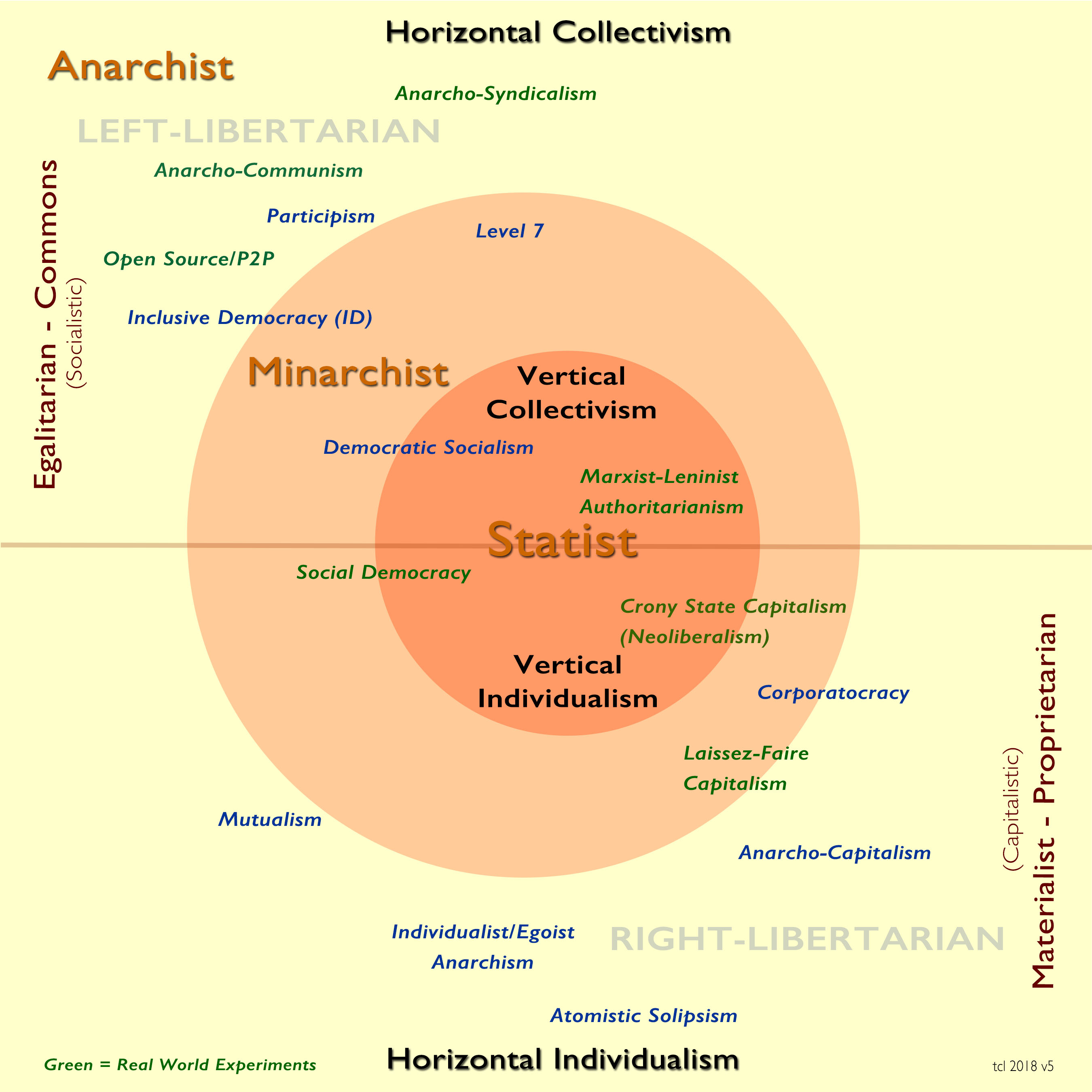
4. How can we know any of these assumptions are valid? Because of research by folks like Elinor Ostrom and the broader examples of successful left-anarchist societies. Ostrom documented countless organically-arising examples of what she called “common pool resource management” all around the globe. In these examples, there was no government involvement, and no property ownership, but instead self-directed, democratic or consensus resource management of common natural resources by small communities. Likewise, the examples of left-anarchist societies (List of anarchist communities) that deliberately diffused political and economic power, and again made all decisions democratically or via consensus, show us that democracy can thrive when it is not corroded and corrupted by the profit motive and generational accumulations/concentrations of capital.
LOL. Really? Well let me first say that the door to much propaganda in the world today is something very sneaky, something called “reasonableness.” In the case of neoliberal market fundamentalists like Mankiw, that “reasonableness” is describing “principles of economics” that, taken individually and in (academic and ideological) isolation, may seem reasonable. In fact one could debate each of Mankiw’s principles ad nauseum, and still be operating within his ideological framework — because of how he restricts the scope of the conversation. You see the problem? If you ask me “what are the principles of a stable romantic relationship,” I could respond: “Well, first off both people in the relationship need to buy the right kind of clothing. Second, they both need to listen to the same kind of music. Third, there needs to be a clear, preexisting understanding of what each person’s role should be….” And so on. And I could keep elaborating on these “principles” as if they actually correlated with every dimension of a human relationship…when clearly they would not. They would, in reality, be confined by a very narrow perspective on relationship that I was effectively imposing on the conversation. And the more emphatically I insisted that nothing else need be included — while I actively excluded very important additional or alternate factors — the more I could perpetuate a discussion that is boundarized by my own biases. And that is precisely what Mankiw is doing…just like many neoliberals before him. I often flag this sort of behavior as ideologically fascist, with the poster child of the technique — in economics at least — being Milton Friedman.
That said, what issues do I have with Mankiw’s 10 principles themselves? That would be a very lengthy conversation. At a 10,000-foot level, I would say they are “half-truths that add up to delusional bupkis.” More specifically, behavioral economics has clearly demonstrated that consumers are not rational operators, and that principles 1–4 are not only oversimplifications, but actually distort or distract from the microeconomic dynamics that are really in play. Human decision trees are not analytically neat-and-tidy, they are messy, impulsive and emotional; and, in fact, marketing knowingly exploits that unstable irrationality to condition completely counterfactual, counterproductive, unhealthy, demeaning and dangerous consumption patterns in consumers. For crying out loud…this is obvious to anyone who observes or researches real-world consumer responses to corporate coercion and manipulation.
After 1–4, Mankiw gets a bit more sneaky with 5–7. He uses the phrasing “trade can,” “markets are usually,” and “governments can sometimes,” and of course we can’t really argue those points, because…well…they are in fact reasonable. Except…well…are they? It is when Mankiw elaborates on these points further (in his writings, etc.) that we see the depth of his blindness — how he does not appreciate or address the complex interdependencies involved, or the widely demonstrated externalities and causal chains, or in fact the well-established track record of what actually works in the real world…and what really doesn’t. This is where we can get lost in the weeds, but suffice it to say that Mankiw doesn’t begin to fully enumerate all of the inputs and outputs of trade, or the complex landscape of variables that influence those inputs and outputs, or, indeed, the disastrous consequences of what can fairly be described as “Mankiw-esque” market fundamentalist policies we have witnessed in the past. His ideas live in a bubble — applicable to what I call “a unicorn market,” one that has never and will never exist.
Principles 8–10, along with most of Mankiw’s thinking, are just more conceptual trickle-down from outdated classical economics. But (and this is pretty ironic IMO) unlike Smith, Ricardo et al, Mankiw fairly reliably excludes the common good from being part of serious deliberation. In other words, he drifts into the realm of laissez-faire that classical economists actually warned about. Where, as Smith wrote: “All for ourselves, and nothing for other people, seems, in every age of the world, to have been the vile maxim of the masters of mankind.” But are points 8–10 accurate in any way? Sure…again if you exclude all sorts of other factors, causes, variables, evidences, etc. that are critical to a complete macroeconomic picture, Mankiw’s points provide a partial, highly tailored framing of causal relationships. So, if a person ignores how markets actually function, the corruptive influences of crony capitalism, how boardroom decisions are actually made, why financialization has displaced production for massive wealth generation, why monopolies occur, where Keynes was proven correct (and what monetary policies actually work), why growth-dependent economies boom-and-bust, etc…and instead pines away for a juicy young unicorn to sate their every neoliberal appetite, well then: Mankiw is the porn for them!
Let me just call out one specific example of Mankiw’s delusional approach. His prescription for most resource allocation challenges is to privatize them — like many neoliberals, Mankiw believes private property is the panacea for all ills. However, Elinor Ostrom demonstrated in her common pool resource management research that the tragedy of the commons need not exist where self-organized, self-managed sharing of common resources is approached a certain way, and she goes on to enumerate observed principles that have been successful. Essentially, there are widely employed systems of access to and utilization of common resources around the globe that completely sidestep the tragedy of the commons without private ownership or government intervention. Hmmm. How could this be? In Mankiw’s unicorn universe, it can’t be, since there will always be free riders and excessive inefficiencies when privatization is absent. But again, Ostrom was just documenting what she observed in the real world, so Mankiw is just, well…wrong. Hence the nature of the problem with most of Mankiw’s thinking — and indeed most market fundamentalist thinking (i.e. Randian objectivists, anarcho-capitalists, individualist economic materialists, Austrian School evangelists, etc.).
There are a number of reasons why technology innovation has the appearance of slowing down — and in some cases really is slowing down. Among them are:
1. Much of the low hanging fruit (technological solutions to universal human challenges) has already been invented, developed, and refined.
2. Much of what remains is more complicated, takes more time, and costs more to research and develop.
3. There are efforts by well-established industries that dominate a given sector to discourage or constrain innovation — the most obvious example being the petroleum industry’s funding of climate change and alternative energy skepticism.
4. Over the past fifty years, commercialism has created tremendous downward pressure on technology costs while generating extremely high expectations of technology benefits. That’s simply not a winning formula.
5. Complexity and massive interdependence across complex systems in modern technology itself is interfering with both rapid development and disruptive innovation. It just takes longer to ensure integration, compatibility, and even moderate levels of future-proofing.
6. Another consequence complexity is a lack of extensibility, and how that impacts costs. A simple example of this is writing a piece of software that is backwards compatible with several iterations of hardware. At a certain point it becomes too difficult to accomplish in a profitable way, which in turn places an increasing cost burden for innovation on consumers — not just monetarily, but also in new learning curves. Buying a new smartphone or laptop every year is a pretty hefty expectation. Therefore a balance has to be struck between rapidity of innovation based on technology, and rapidity of deployment based on consumer acceptance and willingness to bear all of the costs.
Yes of course. Throughout human history innovation and social responsibility — which I would define more broadly as creativity and prosociality — have existed and thrived without the profit motive. In fact the profit motive interferes mightily with both more often than not.
On the one hand the profit motive channels innovation and creativity into a very narrow focus of only what increases profit, abandoning anything that doesn’t promise return on investment. For example, we often see real innovation crowded out by “cheaper and more efficient” forms of production and service delivery, because those types of innovation guarantee greater profitability. Most of the big leaps forward in more creative and life changing innovation, in fact, have arisen through academic and government research, by inventors fiddling in their workshop for fun, artists creating masterpieces for their loved ones, philosophers struggling to answer complex moral questions, or mathematicians solving challenging equations — all because that particular mountain was simply there to climb, not because they would make a buck off of it. The results were then put into production by for-profit companies who reap all the rewards from someone else’s creativity. The profit motive doesn’t have much at all to do with the innovation, just its mass production. This is the case with everything from cell phone technology to medical advances to major changes in the structure of society.
The profit motive has also long demonstrated it can often be at odds with social responsibility and prosociality. There have been countless instances where the profit motive has created oppressive or life threatening conditions and consequences for workers and consumers — and the history of capitalism has mainly been about civil society correcting those abuses (child labor laws, worker safety laws, consumer protections, environmental protections, strengthening democracy against cronyism and plutocracy, etc.). And the oppressive and exploitative conditions created by the profit motive have often threatened the stability, liberty, and thriving of civil society itself. Although it is true that capitalism and the profit motive have provided an extraordinary engine for productivity and economic growth, it has been civic institutions, democratic reforms, educational institutions, and the expansion of civil rights that have established or strengthened conditions that support creativity, innovation, social responsibility, and general societal cohesion — particularly in the face of a countervailing atomistic individualism and commercialistic materialism inspired by the profit motive.
This is not the narrative that the “market fundamentalist” or pro-capitalist folks appreciate or even understand. They are often blind to the antagonisms of liberty, creativity, and civil society that the profit motive has wrought.
But again, if we study the grand arc of human history, most of the greatest innovations, and the greatest evolutions in civil society itself, have been utterly divorced from the profit motive. Humans just love to create, to connect with each other and create community, and to build institutions and civic structures that support those impulses. The profit motive is tolerated because it has lead to a rapid expansion of material wealth and technological conveniences — it has facilitated creature comforts and material security. But it has also eroded society at the same time, which is why it has had to be constantly managed and constrained.
It would be utterly absurd to assume this dispute isn’t settled. Such doubt would be equivalent to asserting the “debate” between humorism and modern medicine isn’t settled, or the “debate” between flat eartherism and the established scientific view of planetary formation is still being “debated.” There are no such “debates.” There are simply ideologically brainwashed adherents who are lost in tribal groupthink on one side, with zero empirical evidence to support the vast majority of their suppositions (i.e. freshwater folks)…and those who rely on an ever-evolving body of evidence and real-world observations to shape their worldview on the other side (saltwater folks). The irony, of course, is that freshwater folks really do believe they are promoting a “rational” view. LOL.
Now, to be fair, there are a handful (but only a handful) of instances where individual aspects of freshwater theory has — historically at least — seemed to align with reality. I’m not going to elaborate on specifics because it will only feed the crazies. How does it feed them? Through a joyfully deranged marriage of partial reinforcement and the illusory truth effect.
Suffice it to say that data supporting most freshwater hypotheses are not only sparse, but completely overwhelmed by the avalanche of data that support most (though not all) saltwater hypotheses, and refute freshwater assumptions in the process.
In essence, to assert that there is still a “debate” between freshwater and saltwater perspectives is really just invoking false equivalence — for example, elevating the unicorns and fairy tales of the Chicago School to be (falsely) equivalent to time-proven Keynesian efficacy, only because they are both described as “macroeconomic theory.”
That would be an almost accurate statement, yes. The challenge (as with almost all attempts at summarizing complex philosophy) is that Popper uses a lengthy, layered sequence of arguments to explain why utopian thinking is problematic — or rather, tends to lead to self-defeating outcomes. Essentially, he argues that it is impossible to fully anticipate or predict how humans will actually behave within a given utopian structure or system, and that, without the ability to modify or evolve such a structure or system in response to those unpredictable events, there will inevitably be unanticipated consequences that undermine the utopia. Which is why, he insists, utopian “central planning” will inevitably lead to totalitarian/authoritarian oppressions — thereby ‘choking its own refutations’ and any chance of healing itself and fulfilling its vision.
Whether this is a valid argument has a lot to do with one’s view of historicism — i.e. whether there is a predictable (at least in the broadest strokes) progression of human society over time — and whether it is at all possible to fully anticipate or accelerate that evolution. My own view is that both assumptions are valid, but that imposing a top-down hierarchical structure or system is the wrong way to go about encouraging change, and indeed can lead to the sorts of problems Popper identified (especially when there are no strong, resilient democratic institutions to check authoritarian tendencies). However, IMO it is possible to encourage societal evolution by facilitating and expanding what I call the “moral creativity” of society — that is, an environment that encourages moral maturation individually and collectively. This is, however, an organic grass roots process centered around community-level relationships, rather than a top-down program that can be imposed on people. You can read more about my thinking on this here: https://level-7.org/Philosophy/Prosociality/
Thanks for the question. Here are some reasons why I think authoritarianism is on the rise:
1. White men have lost status in society. This is frightening. So, in their insecurity and fear, they turn to strongman leaders who seem like carnival mirror imitations of masculinity but whose pedantic, overconfident, authoritarian style reassures these insecure white men that someone is still on their side.
2. Modernity is increasingly complex, confusing, overwhelming, and scary. Rapid change — both cultural and technological — is increasingly alienating many people who feel excluded or left behind by those changes. Authoritarian leaders can appeal to this disorientation, confusion, and anxiety, and create scapegoats that have nothing to do with the actual causes, but are very useful in ginning up votes. These leaders also tend to appeal to nationalism, which helps restore pride.
3. There is increasing exploitation, abuse, and enslavement of the have-nots by the haves everywhere around the globe. This makes people want to rebel, to regain agency and self-respect, and some authoritarian candidates have a knack for hoodwinking people into believing that they (those candidates) have all of the answers to restore freedom and dignity to folks who feel beaten down. In reality, however, authoritarians usually oppose the real remedy democracy itself — and good government and civil society — making these the “bogeyman” that have caused all the problems for the have-nots. In reality, it is big business, crony capitalism, and capture of elections and government itself by wealthy owner-shareholders that have created this imbalance and oppression. But authoritarian leaders are usually in bed with those same plutocrats, and not at all interested in addressing the underlying problems. So in fact the problems just get worse.
4. The masses have been numbed into complacency, indifference, and apathy by a moderate level of wealth, entertainment, constant calls to action (from politicians, advertising, etc.), poor diets, lots of propaganda and disinformation, a decline in IQ and education, and other things that distract or impede them from taking appropriate action or even clearly understanding the problem. I see this as a modern version of “the spectacle,” with many other characteristics and contributing factors that you can read about here: L7 The Spectacle
1. Encourage alignment of our political economy with basic prosocial values and strong civil society — instead of promoting lowest-common-denominator animalism, individualist materialism, and tribalism.
2. Criminalize crony capitalism and corruption of democratic institutions in service of wealth, and jail the worst offenders.
3. Replace “corporate personhood” with another legal entity status for corporations that has more limited rights. Corporations aren’t people, and don’t deserve the same rights and privileges as people.
4. Give up on for-profit market solutions for certain complex problems that can be solved in better ways — healthcare is a good example, as many other countries have demonstrated.
5. Don’t treat advocates of the Chicago School, Austrian School, Virginian School, or Randian objectivism as anything but mildly deranged ideological cranks chasing after unicorns. And definitely don’t let anyone mistakenly believe that the policies and practices promoted by these folks have led to anything but abject and repeated failures and thoroughly debunked theories….
6. Look seriously at commons-centric solutions that do not rely on private ownership but instead promote communal responsibility and collaboration.
7. Focus on evidence-based, scientifically informed, carefully piloted policies with clear metrics to measure their success.
8. Promote broad, frequent, and well-documented education about economics itself and what has really worked well in the real world.
9. Reinstate the Fairness Doctrine so that propaganda outlets can no longer call themselves “news organizations.”
10. Hold social media accountable for propagation of toxic content that deceives and manipulates folks into voting against their own best interests (economically and otherwise).
There are so many reasons to make socialism a reality. Let me count the ways…
1. To counter and eventually heal the horrific exploitations, injuries, and lethalities of capitalism — for workers, consumers, the poor, etc.
2. To counter the unsustainable economic growth-dependencies of capitalism that cannot persist indefinitely anyway.
3. To counter the extractive devastation and depletion of natural resources under capitalism that is exhausting the planet.
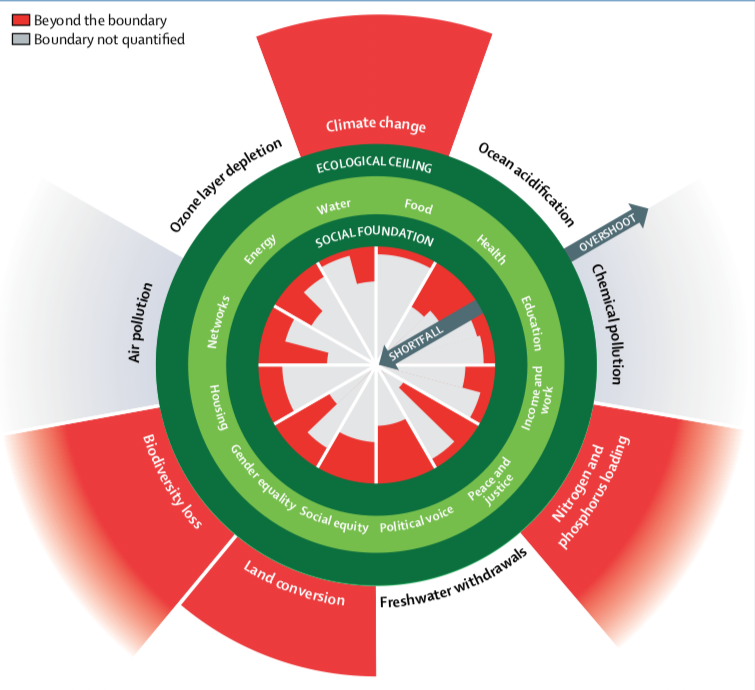
4. To counter the many negative externalities of capitalism — most acutely and emergent ecological and societal damage from climate change.
5. To introduce democracy into economics and ownership in the same way, and for the same reasons, that modern democracies (and especially direct or semi-direct democracies) aim to make government more egalitarian and inclusive for everyone.
6. Because concentrations of wealth ALWAYS lead to concentrations of power, and to the oppression and even enslavement of those who have less.
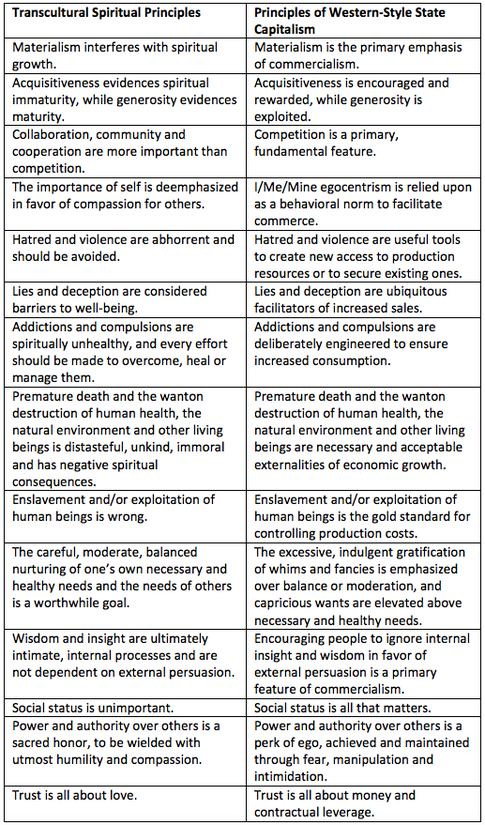
8. If you are a spiritual person of any faith (or no faith at all), and you practice a bit of spiritually-based discernment and wisdom, you will come to realize that socialism follows the spiritual principles taught in all spiritual traditions, and is the wisest course of economic organization for human beings to follow.
Of course it depends on what types of regulation we are talking about, and in which industries — and, more than that, which specific regulations are being discussed. Broad generalizations are troublesome here because they often seem ideologically driven, and are pretty easy to nitpick into dust. At the same time, to do this topic justice we would probably get lost in the minutiae of specific examples in specific industries at specific junctures in history, and miss the forest for the trees…
So after several years researching this topic I’ll shoot from the hip on this and offer what I suspect to be a few “somewhat sound” overarching principles:
1. Deregulation for its own sake is almost always a bad idea — unless something else (incentives, new technology, new business models, new civic institutions, etc.) is deliberately and thoughtfully considered or generated in place of the regulations being retired. In other words, if there is a provably better way to achieve a given outcome, then by all means let's abandon regulations perceived to be holding us back. But “the market” does not — and never has — offered those solutions on its own, and too often the result of deregulation is a Wild West with excessively unpredictable results. The religious conviction that markets can solve complex problems without any oversight or constraints is just that: a religious conviction, with very little basis in observable fact.
2. In reality, there have to be carefully engineered metrics that evaluate outcomes in order to understand what is required to anticipate and manage externalities and social risk. That is where complexity is killing us right now — our systems, technology, and relationships are evolving quickly and incredibly difficult to grok, and it’s even more difficult to craft adequate policies to address them (and the larger the scope of such policy, the more difficult it becomes). And because all of society is morphing so rapidly, it can be counterproductive to apply rules and metrics we used in our past analysis to what we can only vaguely predict for the near future. It’s like trying to catch a train while riding on a bicycle, only to have that train turn into a rocket that launches itself into space. So, without actually deliberately slowing all this progress, growth, and innovation, most regulation is a shot in the dark — a necessary shot (if we lack other structures to achieve similar ends), but less and less likely to have predictive efficacy.
3. That said, costs of deregulation are generally easier to predict than benefits. Why? Because very often there were pragmatic “learned from experience” reasons regulations were put in place initially. Not always, but nearly so, deregulation is a knee-jerk right-libertarian/neoliberal response to bureaucratic interference with profit, and rarely if ever attempts to fully appreciate or understand benefits beyond profit — or costs beyond loss of profit. Have there been some measurable additional benefits for narrowly focused examples of deregulation? Of course. It’s easy to cherry-pick positive examples — but again that’s missing the forest for the trees. On the whole, deregulation without a thoughtful substitute has been disastrous in terms of negative externalities and measurable loss of benefit to society. And that social cost is the more nuanced outcome that pro-deregulation folks don’t want to acknowledge or address.
4. It’s okay to be inefficient. It’s another tangential discussion, but large corporations are not any more efficient than government is — and sometimes they are much worse. Regardless, if inefficiency means, for example, that innovation happens a little more slowly and deliberately, then that’s actually okay if we frame things with concepts like “the precautionary principle.” Again, we have to decide on our metrics — and what outcomes we really value the most.
If I attempt to use some examples to support these broad statements, they can (and will) be easily picked apart. But I would encourage anyone interested in this topic to carefully evaluate the following points to gain insight into what the true costs and benefits of deregulation really are:
1. The deregulation of the airline industry in the U.S. and its impact on rural America in particular.
2. Various deregulations of the banking industry in the U.S. and the measurable consequences of socialized risks for privatized gains.
3. The health impacts on U.S. citizens from the countervailing efforts of coal, tobacco, agriculture, and petroleum industries to rid themselves of regulation and/or achieve regulatory capture of government.
4. Now…who benefited from the deregulation in all of the above instances? It generally wasn’t consumers — or, if so, only a narrow slice of consumers. It also wasn’t workers (or, if so, again only a select few). It wasn’t society as a whole. So….who benefited the most? Well, owner-shareholders of course. And let’s not pretend that “trickle down” supply side fantasies have ever been realized — it has never happened. The benefits remain neatly with those owner-shareholders, their families, and perhaps a few lucky charities, favored financial institutions, and the more loyal and obsequious politicians.
5. Lastly, amplifying the “folllow-the-money” theme, who will benefit most from deregulation of (or lack of regulation for) the Internet? Public lands? Air and water quality? Obamacare? The stock exchange? It’s really not that difficult to understand what (and who) is really motivating most deregulation. It’s just really easy to obscure those causal sparks with distracting rhetoric about “liberty” or “efficiency.”
In any case, these examples would be a good place to start. I can happily offer more upon request.
Funny thing is…in the original thought experiment Hardin uses the variable of cattle that are privately owned. And, because the cattle are privately owned, the common resource used for grazing is abused by those private owners. If the cattle had also been collectively “owned” (i.e. considered an extension of the commons) this thought experiment would not have resulted in the same tragedy. So, contrary to the popular misconception that the lack of regulation of that commons was the problem, it was actually the private ownership of cattle and the unenlightened self-interest of the cattle herders that lead to the tragedy.
Elinor Ostrom’s Nobel prize-winning research on common pool resource management demonstrated that the real-world versions of the commons (i.e. not a flawed thought experiment) actually worked quite well all around the globe — and without either private ownership or government regulation intersecting those arrangements. The collectively-managed commons that disallowed private property and State oversight worked just fine — in fact it flourished, and demonstrates a way forward for us all.
You can read more about the criteria she discovered worked best in common pool resource management here: Ostrom Design Principles
Thanks for the question. Here are some of the top reasons why folks in the U.S. are so “fervently capitalist” and suspicious of “socialism” and social liberalism:
1. Our commercialistic and religious fundamentalist cultures have made us a lot more gullible. We respond to advertising and marketing as if it is truth — which is great for companies selling products, and great for ideologues, con artists, and cult leaders selling lies. Consequently, when right-wing propaganda (Red Scares, “cultural marxism,” McCarthyism, Trumpism, Jordan Peterson, and other neoliberal disinformation) demonizes socialism and liberalism — or makes socialists and liberals scapegoats for outcomes that are actually caused by capitalism (like unemployment, income inequality, influx of immigrants, etc.) — Americans are just more likely to believe the hype. When I lived in Germany, I was stunned by how much more informed and cautiously critical even German kids were than most American adults.
2. Partial reenforcement is powerful. It is absolutely true than one-in-a-million people in the U.S. can work their way from poverty into affluence, and an even smaller number can become extremely wealthy. America really is the land of opportunity. But those are the exceptions, not the rule. Most businesses fail. Most people do not realize their dreams. And most people who try to become wealthy remain poor. Psychologically, though, this reality doesn’t matter, because if even one person in the U.S. wins a major national lottery and becomes a millionaire, people will still believe becoming a millionaire by playing that lottery (or starting a business, or inventing something, or writing books, or performing music, etc.) “is a real possibility.” Which, of course, it is…it’s just not very likely at all.
4. Lastly, there are nut-job market fundamentalist outliers who are very vocal. Just like Twitter “cancel culture” doesn’t represent most left-leaning folks, there are frothing-at-the-mouth far-right crazies who get a lot of attention on the Internet and in mass media, but who don’t represent a majority of more centrist right-leaning Americans. I’m speaking of course of fans of Ayn Rand, Murray Rothbard, Milton Friedman, James Buchanan, and other thought leaders for the broken brain crowd — many of whom subscribe to the right-libertarian movement funded by the Koch brothers.
As a consequence of one or more of the above influences, U.S. citizens have the appearance of being rugged individualists who conflate freedom with laissez-faire capitalism. But that really isn’t true. In the U.S., as elsewhere, the embracing of socialist and liberal policies has actually made capitalism much more successful and enduring (see ). At least…they have up until now…
There are many ways to mitigate the harmful practices of capitalism. There have been the injections of socialist ideals into mixed economies (you can read more about this here: How Socialist Contributions to Civil Society Saved Capitalism From Itself). There have been left-anarchist experiments — see List of anarchist communities - Wikipedia. There have been authoritarian communist experiments (U.S.S.R., China, etc.) which have drawn a lot of criticism, mainly because they haven’t been very democratic, and have been equally exploitative — a sort of “state capitalism” run amok. There have also been what Elinor Ostrom called “common pool resource management” arrangements that have worked well for managing the commons (see Ostrom Design Principles). And there have been many additional proposals as well that offer an alternative political economy (here is my own: L e v e l - 7 Overview).
In many of these experiments, some combination of worker-ownership (of the means of production) and public ownership of natural resources (e.g. the commons) have been in play. The challenge, though, is that when these systems are competing with capitalism — or embedded inside global capitalism and subjugated to it — the negative externalities of the global capitalist system are still wreaking havoc on people’s lives, on the environment, and on the planet as a whole. Growth-dependent industrial capitalism is simply too caustic and destructive to continue at such a large scale.
I personally am not a fan of “statist” solutions (see graphic below), and would rather see democratic institutions thrive in a more horizontally collective way. Any concentrations of power end up also concentrating wealth and privilege…that is just how humans get corrupted. Without strong democratic institutions participating in all decisions — at every level — there will always be those who game the system to their own advantage, and to the detriment of everyone else. So diffusion of power and diffusion of wealth must go hand-in-hand (this is why right-libertarian solutions will never work, and why statist governments tend to get “captured” by special interests).
The last issue is that of private property itself, which tends to undermine both personal and collective liberty, and a strong civil society. I’ll offer two essays regarding this:
My advice: don’t get sucked into arguments with anyone who promotes the Austrian School (or the Chicago School, or the Virginian School, or Ayn Rand style laissez-faire). If someone identifies as subscribing to these ideologies, just smile and politely exit the conversation. Why? Well, for one, these are what I call “unicorn” economic theories — they have no basis in the real world, have never been effective when implemented, and nearly all of their tenets have been repeatedly debunked. For another, anyone who subscribes to these idealogies is probably a) not the sharpest tool in the shed; b) brainwashed by market fundamentalist groupthink and not susceptible to reason; c) trapped within malicious logical fallacies and half-truths just as Friedman, Mises, Rothbard and Buchanan were; and/or d) suffering from mental illness or serious childhood trauma. From many years of personal experience attempting to bridge the divide between evidence, reason, and the Austrian School fantasies, I can tell you it’s pretty pointless. You’ll just confuse them at best — or enrage and alienate them at worst.
So, if you want to look at some more interesting and valid critiques of socialism (with some interesting solutions included), read Alec Nove’s The Economics of Feasible Socialism Revisited. And if you want to become conversant in a more sane and rational approach to market fundamentalism that acknowledges its inherent flaws, read Robert Nozick’s Anarchy, State, and Utopia.
Thank you for the question.
There seem to be multiple issues and assumptions in this question, so I’ll try to tease those apart….
1. The “West” is not monolithic. So although many of the points below apply elsewhere in the western world, I will concentrate mainly on the U.S.
2. Is there a cultural revolution goin on in the U.S.? Yes, though it’s been a very slow moving one. Essentially, the wealth, status, and cultural relevance of a more conservative rural and blue collar white America is being usurped by urban, high-tech, more progressive and multicultural America. The rural and former industrial areas of the U.S. are getting hollowed out, and populations are increasingly concentrated in urban centers.
3. Socialist ideas, as implemented alongside markets in Western countries (see mixed economy), have always help fix the worst problems and abuses of capitalism. You can read more about this here: How Socialist Contributions to Civil Society Saved Capitalism From Itself. Marxist-Leninist forms of authoritarian communism, however, eventually were perceived as threats to the U.S. This was framed as an ideological and cultural clash (around liberty, economic opportunity, collective morality, etc.), but really was much more about economic competition between Western crony capitalism where corporations held much of the economic and political power, and communist “state” capitalism, where officials in the Communist Party held that power. This competition over control of capital has been the source of most anti-communist rhetoric in the U.S. (see Red Scare).
4. A separate — and more legitimate IMO — conflict between Marxism-Leninism and civil society in the West centers around the issue of democracy: the empowering of people to self-determination. This has been playing out acutely in Hong Kong. The fundamental difference between a Communist Party with a “president for life” and governments with officials who can regularly be voted into and out of office is profound — in both perception of a lust for power, and its actual diffusion. Of course, there are differing levels of democracy, too: Switzerland’s semi-direct democracy empowers the local and national electorate much more than the representative democracy of the U.S., for example. What the people of Hong Kong are resisting is losing even the semblance of local democratic self-determination.
5. Mao Zedong was actually, in the early stages of his ideas about communism, more attracted to Kropotkin’s anarcho-communism than to Marxism-Leninism. If Mao had followed his initial leanings regarding revolution, China would be a very different place — and Hong Kong would not be rebelling against centralized control. A main difference with Kropotkin is that there are no centralized controls — or any possibility of an authoritarian government — because decisions are made locally and more democratically.
Taken altogether, the main contrast and conflict in this context between “the West” (mainly the U.S.A.) and “communism” (mainly as implemented in mainland China) centers around two tug-of-wars:
1. In the economic system: Between plutocratic crony capitalist controls and centralized authoritarian controls over capital (really this means between private ownership of the means of production by a select few vs. public ownership of the means of production that is also controlled by a select few…so interestingly the end result is strikingly similar).
2. In the political system: Between democratic civil society and authoritarian, non-democratic centralized controls (again, though, the ultimate outcome in plutocratic crony capitalism in the U.S. ends up looking very similar to communist China in real terms…just with the constant threat of disruption to plutocracy, as Donald Trump is finding out firsthand).
If China became more democratic — with more diffused and distributed power across a strong civil society, and as Mao initially envisioned via Kropotkin’s influence — then “the West” would have a much weaker case when arguing that China is “less free.” Even allowing Hong Kong more self-determination, as China initially agreed to do when it took over from Great Britain, would go a very long way toward easing tensions. But, as throughout most of human history, concentrations of capital and concentrations of political influence nearly always go hand-in-hand. Greed for wealth ends up marrying itself to greed for power. Some of the most notable exceptions have, again, been anarcho-communist and other libertarian socialist experiments. For examples of those, see: List of anarchist communities.
Thank you for the question. The problem the OP is facing is the second part of the question: “to convince liberal friends of more radical change.” Remember what happened to the Occupy movement? The problem wasn’t that folks needed to be convinced — I think most left-leaning people understand that capitalism is hugely problematic and increasingly unsustainable. The problem is having a clear vision about what to do about it.
To that end, I came up with this website: L e v e l - 7 Overview, where I outline twelve “Articles of Transformation” — proposals for how a new political economy that replaces capitalism would look and function. Intrinsic to those twelve articles are the many flaws in capitalism that need to be addressed. Again, though, the main objective is to propose a workable alternative. I would also recommend taking a quick look at this page on the website, which describes various forms of activism with links to resources: L e v e l - 7 Action
Lastly, it would probably be helpful to share how Noam Chomsky discusses the flaws of the capitalism that exists today, as he does such a great job:
This is probably the most widely propagated misunderstanding in modern times about Aristotle’s thinking — a longstanding misuse of what Aristotle wrote in Politics about the different forms and flavors of democracy. You can read a translation of what Aristotle actually wrote here: The Internet Classics Archive. Basically, Aristotle is most critical of certain manifestations of democracy, and actually praises other variations, though of course he places his vision of polity above them all as the best form of government to serve the common good. But the gross generalization one often hears today that Aristotle disdained all democracy as “mob rule” is not accurate. Aristotle’s thinking on democracy is nuanced, and he often will answer his own objections about it.
I’ll offer just two sections in Politics for consideration. The first is this, from Book Three, Part Eleven, in which Aristotle seems to extoll the benefits of “the wisdom of the multitude,” as long as special knowledge isn’t required to make a judgement — or, alternatively, if those who vote are well-educated! — and the crowd making the judgement isn’t “utterly degraded” (i.e. mindless brutes): (my emphasis added below)
“The principle that the multitude ought to be supreme rather than the few best is one that is maintained, and, though not free from difficulty, yet seems to contain an element of truth. For the many, of whom each individual is but an ordinary person, when they meet together may very likely be better than the few good, if regarded not individually but collectively, just as a feast to which many contribute is better than a dinner provided out of a single purse. For each individual among the many has a share of virtue and prudence, and when they meet together, they become in a manner one man, who has many feet, and hands, and senses; that is a figure of their mind and disposition. Hence the many are better judges than a single man of music and poetry; for some understand one part, and some another, and among them they understand the whole. There is a similar combination of qualities in good men, who differ from any individual of the many, as the beautiful are said to differ from those who are not beautiful, and works of art from realities, because in them the scattered elements are combined, although, if taken separately, the eye of one person or some other feature in another person would be fairer than in the picture. Whether this principle can apply to every democracy, and to all bodies of men, is not clear….For a right election can only be made by those who have knowledge; those who know geometry, for example, will choose a geometrician rightly, and those who know how to steer, a pilot; and, even if there be some occupations and arts in which private persons share in the ability to choose, they certainly cannot choose better than those who know. So that, according to this argument, neither the election of magistrates, nor the calling of them to account, should be entrusted to the many. Yet possibly these objections are to a great extent met by our old answer, that if the people are not utterly degraded, although individually they may be worse judges than those who have special knowledge — as a body they are as good or better.”
Later on, in Book Four, Part Four, Aristotle opines that the rule of law and equality of participation permit a successful constitutional democracy to flourish. The problem arises when there is no justice — no supreme rule of law — and the will of the majority begins behaving like a monarch. Aristotle further warns that, in such conditions, demagogues tend to rise to power. Of special note is the following section — please read it carefully:
“At all events this sort of democracy, which is now a monarch, and no longer under the control of law, seeks to exercise monarchical sway, and grows into a despot; the flatterer is held in honor; this sort of democracy being relatively to other democracies what tyranny is to other forms of monarchy. The spirit of both is the same, and they alike exercise a despotic rule over the better citizens. The decrees of the demos correspond to the edicts of the tyrant; and the demagogue is to the one what the flatterer is to the other. Both have great power; the flatterer with the tyrant, the demagogue with democracies of the kind which we are describing. The demagogues make the decrees of the people override the laws, by referring all things to the popular assembly. And therefore they grow great, because the people have all things in their hands, and they hold in their hands the votes of the people, who are too ready to listen to them. Further, those who have any complaint to bring against the magistrates say, 'Let the people be judges'; the people are too happy to accept the invitation; and so the authority of every office is undermined.”
Sound familiar? This is, after all, what has been happening in the U.S. of late: the rule of law has been undermined, there is no equality of democratic participation or representation, and a flatterer has been enabled by a popular assembly to exercise despotic whims and override a more deliberative democracy subject to the rule of law.
With Politics having been available for the past 2,370 years, perhaps we should have seen this current devolution coming….?
First, I think this speaks directly to the fundamental failures of both a medical system focused on profit, and the diseases of consumerist society that externalizes is agency and happiness into commercialized dependencies (on technology, pharmaceuticals, titillating self-distractions, self-medicating behaviors, etc.). Not only can we lay the epidemic levels of unhappiness at the feet of these causes, but also the horrific mishandling and counterproductive treatment of both serious and debilitating genetic or epigenetic psychological disorders (bipolar disorder, various personality disorders, schizophrenia, etc.) and what we could describe as more environmentally exacerbated or triggered conditions (PTSD, depression, anxiety, etc.). For-profit medicine and a culture of commoditized well-being have been disastrous amplifiers of mental illness in the modern world. To understand these impacts, check out:
So part of the answer to this question is addressing those underlying amplifiers: if we attenuate or eliminate these causal factors, there will be less mental illness in society — both in terms of stress-induced phenotypical expression of genetic disease, and crippling cognitive behavioral responses to stress. The principles of what is basically a preventative approach to mental illness have been demonstrated by a number of success stories. Check out 'Care BnB'- the town where mentally ill people lodge with locals and Soteria (psychiatric treatment) - Wikipedia, both of which essentially replace a transactional, commercialized model of treatment with a relational, community-centric one.
In addition, in my own L e v e l - 7 proposals, access to mental health resources is treated the same way as access to physical health resources: it’s integral to civil society and part of a “Universal Social Backbone” available to everyone without cost.
This is similar to a left-libertarian approach to criminality in society: by reducing the incentives to criminal activity, diffusing and reversing dysfunctional cultural norms that promote violence and coercion (including, and perhaps most especially, the concept of private property — see Private Property as Violence: Why Proprietarian Systems are Incompatible with the Non-Aggression Principle), and strengthening community-centric civil society at the same time, we may not be able to eliminate criminal behavior altogether, but we can greatly reduce it to the point where enduring interpersonal relationships and strong expectations of prosociality have a greater regulatory effect than policing ever could.
That said, the issues of personal agency and selfhood are also at the center of this question. I lean in the direction of personal agency trumping societal or institutional impositions of will. At the same time, I have a right-libertarian friend who was institutionalized and medicated under a 5150 (involuntary psychiatric commitment here in California), after planning and nearly executing his own suicide. I helped him through that time and afterward, and he has been thriving ever since and has been very grateful that others intervened as they did. He had been on the wrong medication (another consequence of a profit-driven medical system) that worsened his depression, but during his 5150 stay he received much more competent assessment and a much better treatment plan. Even as a lifelong libertarian, he has no problem with his involuntary commitment, because he knows he was not in his right mind at that time. In such cases, sanity is a more critical standard than agency, even (by most accounts) according to the perspective of the personal deemed “insane.”
This is a perfect example of a significant problem endemic our modern world, and that is that “easily explained” theories are usually inadequate, and do not capture reality — even partially.
There are sometimes notable exceptions, where gifted presenters capture fairly complex ideas using simple analogies, word pictures, graphic illustrations, etc. But these instances are pretty rare (for example, I’ve seen only a handful TED talks that actually pull this off), and usually limited to fields of study that can be communicated in a “concrete sequential” way. Particularly dynamic or fluid areas of study with many competing or conflicting dimensions and interdisciplinary dependencies really can’t be represented well in infographics — or, when they are, those representations can end up overly abbreviated and inadequate.
Economics is one of those complex and multifaceted areas of study. It is nearly impossible to shoehorn the complex thought of many accomplished economists’ theories into a simple, easily-grasped infographic. To do so would simply be an injustice to the original ideas. And this is becoming more the case, rather than less so, because so many disciplines have come to intersect with economics. Consider attempting to summarize how Marx, Keynes, Rawls, Veblen, Schumacher, Sen, Picketty, Ostrom, and many others who have contributed to “progressive” economic theory interact with and amplify each other’s observations and proposals! It would be a daunting task…and likely a fruitless one if we attempt to keep things “easily explained.”
At the other end of the spectrum (i.e. conservative/neoliberal economics), we have the Laffer curve, drawn on a napkin in a restaurant, which had no empirical basis or application but “made intuitive sense” in the political sphere, and so became part of an easy sell for trickle-down, supply side economic theory (which has since been debunked by real-world evidence). And we have catchy phrases like “rational actors” in the Austrian School, also without empirical basis, which nonetheless folks can easily grasp and agree with. In fact the list is pretty long for neoliberal economic tropes that have broad popular appeal, but no real-world evidence to support them.
This fundamental problem — what we might call the “pop-psych dilemma,” because it results in similar pseudoscientific consequences — can be found in many different disciplines. Some complex concepts are just really difficult to understand and communicate, and as our scientific framing of the world (or a particular area of study) becomes more and more complex, the ability to effectively communicate those concepts and their supportive evidence becomes increasingly difficult…certainly for anyone who wants simple, easy answers, and doesn’t want to spend time learning the subtleties of something new.
And that’s why sound bite emotional-appeal political discussions rarely go beyond the superficial catch phrases for a given topic. A sales pitch is hardly ever substantive — and that’s really all such policy discussions in mass media, social media, and the political sphere usually are.
Do you see the problem? The minute we make an “easily digestible” explanation of a complex topic (in economics, climate science, epidemiology, etc.) we are almost certainly going to get it wrong. We are going to distort truth to shoehorn complexity into an easily appreciated talking point.
Which is of course precisely what the champions of conservative/neoliberal economic policy tend to do: they convey simple, watered down word pictures of a worldview that is persuasive and sells well, but is ultimately just misleading and false. Milton Friedman was perhaps the greatest master of this technique: he just kept lying and distorting reality — passionately and entertainingly — until a lot of folks just started to believe him and parrot his words.
With all of this said, there are a few “progressive economists” who have tried to provide simplified representations of economic theory. I’m not a tremendous fan, for the very reasons I’ve just outlined here, though I do still find them entertaining. Some examples would be Ha Joon Chang and Robert Reich. Here’s a pretty good sample:
IMO what we somehow need to do is encourage people to enjoy learning, enjoy being “intellectual,” enjoy rich and complex language and ideas — as part of our cultural norm. Then we might actually be able to make decent democratic decisions about these complex issues. Until then…well…we’re likely to just be hoodwinked by the slickest salesman.
First off, it’s much worse than this question supposes. Majority Republican states in the U.S. are by far the largest beneficiaries of ALL government programs. There are some exceptions to this pattern, like New Mexico (which is more of a swing state), but in general it is Republican-majority “red” states who rely the most heavily on socialized support systems. Some detailed recent data on this can be found here: Most & Least Federally Dependent States. There are many simple comparisons you can find around the web, and here’s an example:
Now, many of the posts in this thread quibble over what “socialism” actually is. In short, it is widely acknowledged by everyone who studies political and economic systems and history that there are many different forms of socialism, and the strict and narrow “dictionary definition” of socialism (or capitalism, for that matter) that folks like to use in their arguments simply isn’t sufficient. The fact is that the U.S. and most other affluent, developed countries in the world are “mixed economies” of both socialism and capitalism. I’ve broken things out into a bit more detail here: What are the different forms of socialism?
So the reality is that, yes, Republicans who claim to be opposed to “socialism” regularly depend on socialism to survive and thrive.
BUT — and this is a pretty major caveat — those same Republicans are also constantly working to dismantle and/or privatize any and all forms of socialist institution in the U.S.A. Whether it’s Obamacare, Medicaid, Social Security, or the U.S. Postal Service, Republicans have been trying to obliterate many manifestations of socialism in the U.S. as a central plank of a conservative political agenda. But why are they doing this, if the vast majority of the Republican rank-and-file voters rely on these programs…? Well because what Republican leadership (and think tanks, and wealthy campaign donors, and right-wing propaganda media outlets) really want to do is eliminate what they call “the halo effect” of any successful government programs, a positive perception among voters which — horror of horrors — threatens to make “socialism” look attractive! You can read about this here: Opinion | Covid-19 Brings Out All the Usual Zombies
So we’re left scratching our heads…Is all of this a sort of disjointed, self-contradictory hypocrisy without any guiding principles at all? Or does U.S. conservatism have an ideological anchor? Some core values that steer its ship? Well…there really is only one central theme that aligns with all Republican praxis, and that is a devotion to socializing risks and costs, and privatizing benefits and profits. That is, distributing costs and risks across all of society (i.e. all taxpayers), while concentrating profits and benefits in a select few (i.e. wealthy owner-shareholders), with horrific consequences for civil society. You can view videos of Noam Chomsky interviewed about this here: Noam Chomsky and Chris Hedges discuss the history of neoliberalism and Chomsky's new book "Requiem for the American Dream" And also read more about this here: How to Prepare for the Next Pandemic.
There is, of course, another way to describe this behavior, and that was a phrase Adam Smith coined in his Wealth of Nations: “All for ourselves, and nothing for other people, seems, in every age of the world, to have been the vile maxim of the masters of mankind.”
So, in essence, conservatives love and support socialism when it benefits them, and vehemently dislike socialism when it benefits anyone who doesn’t vote Republican.
The question behind your question is, I think, really about hierarchies and the abuse of those hierarchies via concentrations of power. Once a hierarchy is in place, it just tends to be abused to accumulate power, and then either used for direct oppression and exploitation, or becomes corrupted/captured — as with crony capitalism, clientism, etc. So all traditional forms of left-anarchism and left-libertarianism (which are the same thing btw) have sought to minimize hierarchies, and replace them with diffusions of power — direct democracy, nested councils, subsidiarity, and other form of highly distributed self-governance — and diffusions of wealth (i.e. no private property rights, the commons, public ownership, etc.). There are many historic and present day examples of such left-libertarian experiments, all of which have worked pretty well.
Right-libertarianism, on the other hand, creates inadvertent hierarchies by allowing corporations, monopolies, and concentrations of private property ownership and wealth that ultimately behave just like State institutions (in terms of capacity for oppression and exploitation). Which is likely why there aren’t as many right-libertarian real-world examples — and certainly none on a large scale.
Now even when the objective is to avoid hierarchy and potential tyranny, some left-libertarian and right-libertarian proposals have included minarchist systems. The idea is to create dual systems of power that check-and-balance each other. And we actually see such dual systems working fairly well, even where the State is large — such as in the semi-direct democracy of Switzerland. Really, all that matters is that a political economy be designed so that power and wealth cannot concentrate anywhere, and will always be countered by democratic will.
One such hybrid option is my own L e v e l - 7 proposal. Eventually, the goal would be to attenuate the power of whatever vestigial State is left in place to coordinate things like infrastructure, technology standards, essential goods and services, etc., while strengthening direct democracy and localized civic institutions. But guarding against concentrations of power will, I suspect, always be a perpetual concern…..
Personally I appreciate the simplicity of Raworth’s model (pictured below, from https://www.kateraworth.com/doughnut/). There are undoubtedly nuanced variables within her “shortfall” and “overshoot” trajectories that require much more detailed elaboration, but this is really about vision IMO — and the ability to project that vision out into collective consciousness. The doughnut graphic is really helpful in that regard. So, as a fundamental re-framing of socioeconomic activities away from “infinite growth” (inherently unsustainable) to “living within our planetary boundaries,” I think this makes perfect sense.
So there are a number of facets with the OP’s question: “Why did the left follow Marx and not Bakunin? Wouldn't the world have been better off if a stateless form of socialism had been tried instead of a totalitarian one?” I’ll attempt to address those facets as we examine some possible answers….
1) The “Left” is not monolithic now, nor was it ever…from the very beginning. There were (and are) many forms of socialism — and many of them have been (and are being) tried in different parts of the world, and on different scales. This includes many forms of left-anarchism/libertarian socialism that aligned itself with the stateless vision that Bakunin promoted. In particular, societies inspired by Proudhon and Kropotkin fall into this category. For some of the many successful stateless examples of these, see: List of anarchist communities.
2) The thinking of these two influenced each other — there was a lot of cross-pollination between them. Much of Bakunin’s thinking is reflected in Marxism.
3) As to why Marx was generally more popular that Bakunin during their lifetimes and thereafter, there are a number of compelling theories, and frankly I don’t know which of them is correct. It could be that Bakunin was over-invested in leveraging the “educated elite” of his day to start a revolution and tended to ignore the working class, whereas Marx appealed more directly to the working class instead. It could be an issue of personal charisma. It could be that it was difficult for folks to envision Bakunin’s stateless society (as it still is today), but much easier to entertain the more gradual transition to communism that Marx proposed, along with his very catchy “dictatorship of the proletariat.” It could be that Engels’ eloquent and persistent championing of Marxism furthered it in ways with which Bakunin’s legacy and alliances simply couldn’t compete. Again, I don’t know. There has been much written about this…so perhaps doing more extensive research on this will help.
4) Yes, the world would be better off with stateless socialism. For a glimpse of that world, take a look at the list of anarchist communities in the link above. Some of them are still around and going strong.
Absolutely and without question, YES, as Marx was arguably one of the most important and influential thinkers of the last 200 years.
That said, I would recommend beginning with some of his shorter pieces of writing, just to get a flavor and overview of his thought, prior to attempting Capital. And, when approaching Capital, I would take it in small chunks, rather than all-at-once.
But yes, for anyone who wants to understand much of what the past couple of centuries of human history — and especially the impact of industrial capitalism — are all about, Marx is an essential read. To not read him (or discount him, as some have done in posts here) is simply to remain ignorant and/or deceived about both the nature of capitalism and the nature of Marxism.
Interestingly, in reference to Adam Smith, Smith raised many of the same concerns about unfettered capitalism that Marx addresses in his writing — Marx just did so to a much more detailed and rigorous degree.
As to where to begin, I recommend the following links (to be read in the order they are listed). I think anyone who reads them with an open mind will be duly impressed with Marx’s clarity and accuracy of insight:
Lastly, for a well-organized collection of — and access to — Marx’s work, I recommend this link: Marx & Engels Selected Works. It includes “a short list for beginners” which covers a lot of ground. However, I would still begin with the above-listed links first, before diving into anything else, as they provide helpful context for everything else.
Here is an excerpt from my latest essay exploring the incompatibility between conservative Christianity and the New Testament's central Christian values and ideals.
"...my current thinking about this has distilled the primary dichotomy down to underlying contrasting views about freedom and equality. This may be just one more oversimplification, but here are the basic propositions:
1. Progressives view freedom and equality as collective agreements, supported by evolving cultural norms and the rule of law, that facilitate the most comprehensive collective benefit possible for everyone in society. In other words, progressives view equality between all citizens, and the maximization of freedom for each individual, as a consequence of mutually agreed societal expectations. And why are those agreements important? Because they can achieve egalitarian outcomes across all of society. Importantly, the equality and freedom of all people are predetermined assumptions about both ideal individual rights and the ideal conditions in which they ought to live. Therefore, progressivism tends to view itself as inherently aspirational, aiming for “life as it could be,” in perpetual opposition to a flawed status quo.
2. Conservatives view freedom as a natural right of every person that facilitates their ability to pursue beneficial outcomes according to their skills, aptitudes, and capacity to compete with others. Equality is likewise viewed more through a lens of merit – it is less a predetermined assumption about all people being equal, and more a possibility of achieving equal standing in society that can be earned through demonstrated effort. And what is the presupposed outcome? That some people will be winners, with a greater experience of equality and freedom, and some people will be losers, with less of that experience –but the conservative accepts this as the natural and somewhat fixed order of things. Therefore, conservativism tends to view itself as inherently pragmatic, embracing the status quo of “how things are” – a static view of cultural norms that benefit those who achieve privilege and position – and defending ways those norms can predictably continue.
Much time and effort could be spent appreciating the subtleties of this topic – details like equality of outcome verses equality of opportunity, facilitation of agency verse extinguishment of agency, positive verses negative liberty, and so on – but it seems to me that this boils down to different approaches to ending poverty, deprivation and oppression in their many forms. The conservative views the world as rich with opportunities, with the only major barriers to actualized freedom and equality – and the consequent attenuation of poverty, deprivation, and oppression – being interference or competition from other individuals, and interference or competition from civic institutions. The progressive, on the other hand, views the world as encumbered with many structural and pervasive cultural barriers (racism, sexism, classicism, ageism, tribalism, etc.) that need to be removed through collective agreements –most often embodied in civic institutions and the rule of law – in order for freedom and equality to be actualized, and for poverty, deprivation, and oppression to be vanquished. At its core, therefore, this remains a diametric opposition.
But which approach does the New Testament endorse? What does Jesus promote? For me this is where things get really interesting. Because the New Testament consistently presents very much the same contrast we see embodied in progressivism and conservativism. With regard to “the world as it is,” there are frequent reminders in scripture that the world cannot be changed, that its machinations, power structures, oppressions, arrogance, striving, and injustices must be accepted and its burdens dutifully borne. At the same time, the kingdom of God is promoted as “the world as it should be,” full of compassion, forgiveness, kindness, humility, generosity, and mutual aid. Christians are encouraged again and again not to conform to the world’s values, priorities, and divisive norms, but instead to evidence the fruit of the spirit of Christ (Gal 5:22) by reforming personal priorities and values – and the collective priorities and values within the Church – to reflect a new way of being. In fact, such reformation is itself proof of the kingdom of God’s establishment in the world. And what characterizes that new way of being? The virtues of righteousness, peace, trust, and agape that we explored in the earlier table (see below), and which are embodied in progressive praxis.
This contrast between the way of the world and the way of the spirit is really the central drama of all New Testament scripture. As Jesus personifies the way of the spirit in all of his interactions and pronouncements, he is confronted with antagonism from the status quo – from those who wish to preserve the way of the world and their own places of power and privilege within it. Jesus and his Apostles become ambassadors of a more egalitarian ideal, an aspirational vision of “life as it could be” in the kingdom of God, and thereby encounter tremendous resistance and resentment from those who currently benefit from the status quo, and therefore feel threatened by anything that challenges its power structures. This is why the Pharisees and Sadducees were enraged by Jesus’ pronouncements, why the Romans were concerned by Jesus’ rise in popularity, and what ultimately resulted in Jesus being condemned to death by crucifixion. Jesus was the radical progressive visionary of his time, while the pragmatic and entrenched conservatives were, in fact, the ones responsible for his death."
Here are some of the many ways a capitalist view of “wealth” (as the accumulation of capital) is created, many of which have actually become much more common than “adding value with labor” in today’s highly financialized economy:
1) Buy cheap and sell high — without adding any value, but simply by timing the selling and buying the right way (this includes holding for a time, so that time does the work), or by exaggerating (persuading, cajoling, deceiving, “selling”) the value downward when purchasing, and then upward when selling.
2) Use leverage and debt — borrow against existing assets and invest(or lend out) at a higher rate of return than it costs to service the debt.
3) Lend money.
4) Charge rent for something that is already owned — this is income creation without adding value, and can occur over many generations after initial ownership (by a family or business) is established.
5) Gate-keeping — charging for access or the right to use anything, including someone else’s knowledge or innovation, some unimproved land, a road that was paid for by others, high speed Internet vs. low-speed (there is little difference between the two in provisioning — it’s merely a software setting), and so on.
Those are the biggies IMO. There are others that do require a little bit of labor for a disproportionately high return, and they are equally common today. These include creating artificial demand (direct consumer advertising by pharmaceuticals is a common locus for this), opportunistic market entry, privatization of publicly held resources, regulatory capture, etc. But any reasonable standard, these are all nefarious, unethical ways of creating wealth.
Here are some of the reasons socialism is poorly understood — especially in the United States.
1) First, there is a lot of anti-socialist propaganda. The Red Scares after WWI and WWI, and then McCarthyism, generated some profound misinformation about socialism that has persisted to this day. Mainly, this propaganda was invented to protect wealthy owner-shareholders who were (and still are) terrified of losing control over the exploitative, extractive wealth creation that they benefit from. It’s why there is also anti-science propaganda, anti-education propaganda, anti-intellectualism propaganda, anti-expert propaganda, anti-government propaganda…it’s pretty endless. The idea is simple: maintain the status quo that funnels capital to the rich at the expense of everyone else. It’s a pretty strong motivation to dissuade people from looking at other ways to do things.
2) General ignorance about history and the positive models and impacts of socialism is another reason. There are many socialist countries that were never authoritarian communist like the U.S.S.R. or China. But folks don’t learn much about those in U.S. schools or from corporate controlled media. Some of those countries still exist. If an “anti-socialist” attempts to argue that socialism has never succeeded, I simply ask them to name some of the thriving examples of municipalism, anarcho-syndicalism, social democracy, and anarcho-communism that have existed and still exist, and explain why they think those countries are failures. But of course they never can, because all of the “anti-socialist” propagandists I have engaged (really without exception) are completely ignorant of those countries.
3) Ideological fervor and blindness. This is a pretty common problem among vocal anti-socialists who are deeply committed to capitalism. The discussion rarely centers around facts or evidence, and anti-socialist arguments quickly devolve into logical fallacies (straw man arguments, red herrings, false equivalence, confirmation bias, whataboutism, etc.). Just look at many of the posts in this thread, where the level of vitriolic frothing-at-the-mouth is fairly extreme. It’s hard to help such folks understand where they are mistaken. Generally, when I share corrective facts and narratives about socialism with “true believer” market fundamentalists (neoliberals, laissez-faire, Randian objectivists, Austrian School fans, Chicago School fans, etc.) the anti-socialists usually fall silent, dwindle into passive-aggressive sarcasm, or morph into sociopathic ranters.
4) Here there be trolls. Social media provides ideal hunting grounds for folks who just want to provoke and engage in rhetorical combat.
So the OP is definitely onto something here. For one, direct and semi-direct democracies do exist where people continue to have a say in their own governance on nearly any issues they choose to engage on. Examples range from Switzerland (semi-direct) to Rojava and the Zapatistas (direct). And those systems work surprisingly well.
So why do we have representative democracies instead of direct or semi-direct democracies?
Well, the history of U.S. democracy provides a very good example of how this came about. Most of the Founding Fathers were, frankly, terrified of direct democracy, and echoes of those fears remain today when folks use terms like “mob rule” to characterize such a system. Instead, the Founders decided that the best way to moderate the “mob” of the electorate was to ensure only educated, wealthy, ostensibly white, landed gentry (men of course) could be appointed by states to the Senate, to act as a firewall against any overreach of the will of the people. Kinda funny, isn’t it? Not really democracy at all…but that non-democratic system remained in place in the U.S. until the 17th Amendment, ratified in 1913. So for nearly the first century-and-a-half of U.S. “representative democracy” the voters couldn’t even elect their own representatives (senators in this case).
In short, the primary answer is fear that people wouldn’t be educated or world-wise enough to make good decisions. And we hear that same argument from many conservatives today. So who gets to decide, then? As it was in the beginning, so it remains today in the U.S.: Because of issues like corporate lobbyists such as A.L.E.C, massive amounts of dark money funding election campaigns because of Citizens United, and imbalanced corporate control of media messaging after the Fairness Doctrine was ended by Ronald Reagan, those with financial means and social capital and status have ended up making a lot of the most important decisions about who gets elected and what legislation gets passed. This is why the U.S.A. has always been a mix of democracy and plutocracy — with the balance leaning more and more toward plutocracy in recent election cycles.
Again, there are many direct and semi-direct democracies around the world that demonstrate how an engaged, thoughtful, and well-informed electorate can make excellent governance decisions about their own lives — both locally and nationally.
Democracy has always been pretty fragile, but it has some natural enemies. I think we can easily observe four categories of those enemies to democracy:
1. Some enemies can be characterized as those persons or groups who do not wish to cede power or wealth — or those who wish to accumulate more power and wealth than others in society. We might call these “active external antagonists.”
2. There are the inherent characteristics of the electorate, which are what we might call the “passive internal barriers,” such as apathy, ignorance, low intelligence, immaturity, or gullibility.
3. There are then “passive external barriers” such as the lack of adequate or reliable information to make complex voting decisions, or logistic or institutional difficulties in voting or registering to vote.
4. And finally there is “active internal sabotage,” where voters remain willfully ignorant on issues that require their vote, actively shun voting as a consequence of conspiracy beliefs, adopt an ideology that opposes democratic institutions and practices, or consciously abdicate their own agency through misplaced faith in an individual or political party (and just vote in lockstep conformance with that party).
So the “first step to losing democracy” can really be any of these enemies gaining a sufficient foothold in society to undermine its democratic institutions. More alarmingly, there might be combinations of these enemies occurring at the same time. As a worst-case-scenario, we would see ALL of these enemies converge on democracy in the same period of time. Unfortunately, that appears to be the condition of many democracies around the globe right now.
As an example, I can speak to what is occurring in the U.S. in this regard. Here is how those enemies have been rearing their ugly heads over the past few election cycles:
1. Active external antagonists: On the one hand, we have special interests with enormous wealth who have captured election campaigns, lobbying efforts, and consequently control legislation and regulatory agencies. This group can broadly be characterized as “neoliberal crony capitalists.” On the other hand, we have the “active measures” from Russia and other state actors who seek to confuse, disrupt and distort democracy in the U.S.
2. Passive internal barriers: This has been a pervasive downward spiral in the U.S. for many decades — apathy, ignorance, low IQ, immaturity, and gullibility have been hallmarks of the American electorate across all parties and affiliations. This may be cultural, it may be a consequence of Americans “relaxing” into relative affluence and comfort, it may be the result of a passive consumer mindset that is conditioned to be “sold” on every idea or decision, or all of these things.
3. Passive external barriers: Although logistic and institutional difficulties have increasingly been engineered by the GOP (through voter disenfranchisement, reduced voting locations and times, barriers to voter registration, gerrymandering, and other strategies, etc.), there is also the issue of real and exponential complexity in voting decisions. Also, although there is good, reliable information available for voters, it is increasingly challenging to differentiate it from the much louder noise and distraction of propaganda media outlets.
4. Active internal sabotage: Certain ideologies and beliefs have taken root in the U.S. that amplify pessimism, disinterest, and even despair and hostility regarding voting and democracy. These can be found across the entire political spectrum, but seem to be concentrated (and much more aggressive) in the far Left and far Right. Sometimes, the aim of these ideologies is to dismantle democracy and democratic governments entirely. Somewhat ironically, a common theme among these disaffected voters is that they would like to have “more freedom” than the current system affords them, but of course by not participating in or undermining democracy, they are self-oppressing: reducing their own agency and freedom to pre-democracy levels.
So we aren’t in a great place right now. To restore democracy — which after all is the greatest collective expression of human freedom that has ever arisen in the world — we all likely need to a) re-engage in democracy as actively and thoughtfully as possible, and b) forcefully oppose and reform the internal and external “enemies” to democracy described above. If we can do this, I think there is hope. But we may genuinely be running out of time….
First, that’s already happening. Established movements/practices like P2P and Open Source, for example, as well as the democratization of knowledge and creative sharing via the Internet, and efforts to return economies to a commons-centric model. The “trigger” has simply been the desire to create and collaborate, while sidestepping an obsession with ownership and profit, often with very specific and pragmatic ends (in the real world). So in both the digital realm, and the material realm, “spontaneously collaborating and sharing without coercion” is a fait accompli.
In terms of “how we get there,” well, certainly educating ourselves (and helping educate others) about the current models is an important part of the mix — and, perhaps more than that, creating a positive vision around them. At the same time, encouraging folks to question the destructive aspects of capitalism is also important — to help them recognize that we do, in fact, need to change our systems and philosophy of production and distribution in order to survive as a species.
There are also forms of activism that can help “trigger” a change. I cover some of those here: L e v e l - 7 Action. There is a lot to take in on that web page, but the essential idea is a multi-pronged approach to change that addresses many different levels and arenas of engagements. Please consider spending some time there and following the links to more in-depth discussions of many topics.
In a very real sense, the current COVID-19 pandemic may help folks reevaluate the inherent flaws of our global economic system, and perhaps consider some of these alternatives.
The roots of progressive ideals can easily be traced to the Enlightenment in Europe, where increased understanding and knowledge through reason and scientific inquiry were intended to bring about improved conditions for everyone in society. This was in contrast to the established “traditions” of that time, and so the idea of progress for the betterment of humanity became associated with the Enlightenment itself. And since two core tenets championed by Enlightenment thinkers were liberty and equality, the process of social reform (and revolution) to upend the old traditions and social order also became associated with the Enlightenment.
Now the initial inspiration for the progressive movement in the U.S. was a response to the rise of industrial capitalism, along with its abuses of workers and concentrations of wealth in a small elite, initially during the Gilded Age. In a way, the power of large corporations became a stand-in for the social hierarchies and abuses of old that the Enlightenment sought to address: capitalism replaced feudalism but mirrored the same oppressive power structures as the wealthy owner-shareholders took the place of aristocracy. In this sense progressivism echoed socialism’s response to the same challenges — and with many of the same proposals (worker solidarity, civil rights, etc.). But it is really only at that thirty-thousand-foot level that we can draw parallels between those two movements — or track their evolution over time — but we can see inclinations of the Enlightenment reflected in both. Progressives were primarily interested in returning “power to the people,” and having representatives of local and federal government be much more responsive to the electorate than to special interests like the wealthy elite. Initially progressives focused primarily on empowering and protecting white, working poor folks and their families in this way — and included women’s suffrage in that mix. While socialism of that time also shared this focus, only some socialists advocated advocated as vehemently for strengthening democracy overall.
Today, although it not as coordinated or clearly defined a movement, the central tenets that continue to guide progressives is strengthening civil rights and civil society in opposition to plutocratic oppressions, and continuing to champion liberty and equality. So we can say that these have remained the “traditional values” of progressivism since its beginnings.
Interestingly, what has also persisted in progressive ideas and strategies since the beginning is an almost ridiculous (in terms of effectiveness) diversity of approaches. There has never really been uniform agreement among progressives about how to solve the wealth concentration problem, worker empowerment problem, or improving our elected representation problem. Which is why someone might indeed ask the question of whether “traditional progressivism” has really ever existed. So we can say that the intentions — the goals and aspirations — of progressives have always been the same, and unifying in that respect. But methods…no, that’s always been a hodgepodge of tactics and proposals. In fact, sometimes these have been contradictory approaches — for example, some have emphasized centralized federal government solutions, while others emphasized more localized or distributed solutions (via community organizations, NGOs, etc.); some have emphasized collective solidarity (in unions, civil rights movements, etc.) while others have seemed more individualistic (individual freedom of choice, abortion rights, etc.). These differences probably owe themselves to different conceptions of both liberty and equality.
Lastly, there are some reliable commonalities between most, if not all, modern progressives. The original emphasis on liberty and equality is still present, but it has expanded considerably since the Enlightenment. Today these values are championed not just for white working poor, their families, and women’s suffrage, but also for expanding the same rights and protections to people of color, to animals and the environment, to the sick and elderly, to the LGBTQ community, and so on. And the approaches to championing these interests still rely on reason and scientific inquiry to a substantive degree. The ultimate aim? To improve conditions for everyone — this is still how progress is defined — in opposition to those who would prefer to retain the old hierarchies and concentrations of wealth and power. Fighting plutocratic oppression with democracy and strong civil society is really still the heart and soul of progressivism, and what makes it a longstanding “tradition” in almost every respect.
First I would encourage everyone not to listen to anything Trump says…ever. Any sensible person with an average IQ can observe that Trump can’t stop lying and contradicting himself. At every turn, he has downplayed the severity of COVID-19 and its impacts. Trump is, by almost any measure, an incompetent idiot. So instead, we should all become a bit more educated about the details of the novel coronavirus ourselves. Here is a page with helpful links and a frequently-updated overview: COVID-19 Overview
As to the impact on those under a “stay-at-home” order….
The potential negative impacts are both economic and psychological. Some people (like me, to be honest) are natural hermits who are perfectly happy spending time alone, and can keep themselves occupied and entertained without a lot of social interaction. Others are wired to be much more social, engaged, and entertained through interactions and activities that involve many people. This latter group will undoubtedly suffer a great deal during this period of social distancing — in particular I’m thinking of young people whose entire self-concept and self-esteem may be grounded in their social interactions. So having online activities and ways to connect virtually may be very important, and it seems as though there is already recognition of this and attempts to increase such online activity options. Nevertheless, depression and anxiety may be real battles for large numbers of highly social people right now. To address that challenge, I recommend folks take a look at the thirteen dimensions of nourishment (there is a free overview and self-assessment on the Integral Lifework website), and see if they can add some activities that nourish parts of themselves they may be neglected.
On the economic side of things, the situation could get very dire for those who have lost all of their income. There are several efforts at the state and federal levels to help people — from direct monetary payouts, to temporary debt and recurring bills forgiveness, to free medical care for COVID-19 tests and treatment. The benefits of these efforts will become clearer in the coming weeks, and they will certainly help cushion the blow. But they will only be effective for the short-term. The more permanent solution will be a) a COVID-19 vaccine, which is likely 12–18 months away; or b) a more successful and reliable COVID-19 treatment than anything tried so far — which could arrive much more quickly than a vaccine. Once either or both of these are in place, then economic recovery can begin in earnest. At the same time, this may also be a helpful moment in human history to reevaluate whether neoliberal crony capitalism — with all of its inherent resource depletion, worker exploitation, negative externalities (like climate change), and economic inequalities — should remain our primary global political economy. It just might be time for a change that would help us be better prepared for future crises like COVID-19. To that end, here is a link to an alternative political economy that is more equitable, sane and sustainable: L e v e l - 7 Overview.
There are a few factors in play I think. First, there is a fair amount of research that shows differences in right-leaning an left-leaning people — both in terms of the values (or “virtues”) that are most important to them, and in the emotions with which they most frequently operate and are motivated. I’ll leave it to you to figure out which is which from the lists below. Of course, there are also folks who are closer to the middle, sharing characteristics of both groups. But in times of crisis, polarization tends to be even greater, so for now we’ll just look at the two extremes….
Characteristics of Group A:
1. More closed-minded and reactive to things that are new or “different”
2. Strong fear-based reasoning, often centered around losing status (both personally and for their group)
3. High tolerance of cognitive dissonance (when facts don’t match beliefs) and rejection of evidence that contradicts their beliefs — sometimes to the point of rather stubborn stupidity
4. Strong sense of loyalty to own tribe and traditions, resulting in reflexive “Us vs. Them” reasoning
5. Highly skeptical of science, government institutions, genuine altruism, collective concerns, leveling the economic playing field for everyone, and the importance of civil society itself
6. Insists that private enterprise is “more efficient” than government in providing public goods (healthcare, utilities, etc.)
Characteristics of Group B:
1. More open-minded and accepting of things that are new or “different”
2. Strong inclusive and compassion-centered reasoning, sometimes to the detriment of their own status and the status of their group
3. Low tolerance for cognitive dissonance, and fairly frequent updating of position based on new evidence
4. Hardly any loyalty to own tribe and traditions, and so sometimes creating “circular firing squads” within leadership
5. Strongly motivated to embrace science and justify positions and policies with scientific evidence; more trusting of government institutions; confident that altruism is real and important; and generally more invested in collective concerns, leveling the economic playing field for everyone, and the importance of civil society itself
6. Is skeptical of the profit motive’s efficacy in navigating or providing public goods
Now inject a new crisis into the situation: a previously unknown and highly contagious virus that requires close coordination between all governmental institutions; demands reliance on scientific data to plan an effective response; is indifferent to status and partisanship (i.e. doesn’t favor one group over another); and reveals profound weaknesses in privatization of public goods, where the profit motive simply doesn’t work for the scale of response required.
I think when we break down the political spectrum to these kinds of characteristics, it quickly becomes evident why left-leaning folks tend to respond one way, while right-leaning folks tend to respond in an opposite fashion.
The right-wing propaganda machine has finally lost some of its momentum and, as embodied in the idiocy of Trump, is being abandoned as a farce. The echoes of that propaganda still persist in the fear-mongering around a Sanders nomination — from media on the Left and the Right — but folks are beginning to see through the supposed “moderate” critique to what it really is: the decades-long disinformation campaign of right-wing think tanks, ideological politics, and thought leaders that strives to reject all socialist ideas. This started all the way back with the Red Scare of WWI, was amplified by the neoliberalism of Hayek, Mises and Friedman, came to a head in the era of McCarthyism, resurged in the 1970s after the panicked Lewis Powell Memo (a reaction to the populist revolts of the 1960s), resurged again in the “trickle down” economics of Thatcher and Reagan, was championed even more when the Tea Party movement was coopted by crony capitalists like the Koch brothers, and has now come to a ludicrous climax in the election of an impulsive, megalomaniacal fool as POTUS.
To understand why this conservative “anti-socialist” movement has persisted for so long, just follow the money. The U.S. has had a mixed economy — with elements of both socialism and capitalism — for over a century, but wealthy owner-shareholders always want more. And that means they strive for weaker government and “less interference” from pesky regulations, human rights, environmental protections, etc. This has always been about the rich wanting to get richer, and the only answer to Adam Smith’s “vile maxim” (i.e. “all for ourselves, and nothing for other people”) has been the stronger, more democratic civil society championed by socialism (see How Socialist Contributions to Civil Society Saved Capitalism From Itself). To appreciate just how hard neoliberal conservatives have fought to control and consolidate wealth, I recommend perusing this web page, and then following some of its links: L7 Neoliberalism
Along the same lines, folks are beginning to realize that democratic socialism (as exemplified by much of Northern Europe) is NOT the same thing as authoritarian communism (i.e. Soviet-Style communism) — despite the ongoing right-wing propaganda to the contrary. (For more on this see http://worldpopulationreview.com/countries/democratic-socialist-countries/)
In essence…young folks are becoming better educated about what democratic socialism really is. However…stay tuned for the right-wing propaganda machine to begin spouting lies about how socialism “always fails,” etc.
What a delightfully inane question. Thank you for the opportunity to entertain.
Some questions that we might ponder to burrow down to the heart of this matter, run along these lines:
What have you contributed to society that makes you believe you have the right to expect your neighbors to be obligated to pay for…
1. Firefighters to save you from a burning building while you sleep?
2. Roads for you to drive to work on?
3. A standing army to defend your community from foreign invaders?
4. Police officers to answer a 911 call when someone breaks into your home, threatens your family, or mugs you in the street?
5. Government funded research into vaccines for deadly diseases that would otherwise never be developed?
6. Emergency disaster assistance when a tornado, flood or fire wipes out your entire town?
7. Medical facilities to treat you if you are “out of network,” don’t have adequate insurance coverage, and don’t have enough money to pay out-of-pocket?
And so on…
There are so many things we take for granted as a “right,” when really they are the privileges that societal organization affords us because we have all agreed to cooperate in that society and abide by its rules. In reality, we are all just entitled “freeloaders” when we expect civil society to function at all on our behalf. After all, what have we, personally, done to contribute to the structures, agreements, benefits, protections, and rights of that society? What have we, individually, done to build up or maintain any of privileges society grants us? Usually absolutely nothing…except pay taxes, and conform to the rule of law, both of which many people only do grudgingly.
Really, there are just a few central questions that we need to answer for ourselves:
1. Which civic institutions do we wish to prioritize as the most important, and which members of society do we want to primarily benefit from them? (These are really two sides of the same coin IMO)
2. In whom do we wish to vest the power to make decisions about the prioritization of civic institutions and who benefits from them? In other words, do we want a democratic process, an autocratic process, an oligarchic process….?
3. How do we wish to pay for these civic institutions, manage them, and maintain them?
To say that rule of law that prevents people from randomly murdering each other without consequence is somehow different from young children having unfettered access to healthcare is really an arbitrary distinction — as human beings will die if either consideration is neglected. Until most of society substantively agrees on answers to the three questions above, the rejection of one benefit over another is equally arbitrary, and often based on selfish advantage or consideration. For example: “Why should I pay school bonds when I don’t have any kids?” If everyone thought this way, societal cohesion would quickly disintegrate (and perhaps that is what we see happening in the world right now…).
That said, I am a libertarian socialist, so I’m not really a big fan of large central government. I like diffused, distributed solutions. You can read about my ideas here: L e v e l - 7 Overview
Venezuela’s decline gets discussed quite a bit, and there are wide ranging opinions about it — many of which seem to contain both kernels of truth, and evidence of bias. It’s difficult to find a balanced assessment.
That said, I’ll offer what I believe to be the chief elements of Venezuela’s destabilization and decline, in their rough order of impact and importance:
1. Decades of pervasive and severe corruption — in both government and business independently…and as a “crony capitalist” combination of the two.
2. The predictable course of “the resource curse,” as a consequence of huge oil reserves, the country’s over-dependence on that single source of wealth, and the unreliability and decline in profitability of those reserves.
3. Authoritarian mismanagement and incompetence — Chávez, and then Maduro, could have ruined any form of political economy with their heavy-handed incompetence, but in this particularly case it was clearly a megalomaniacal, utterly failed implementation of a socialistic state-directed economy. (see T. Collins Logan's answer to What are the different types of socialism?)
4. Amplification of problems by sanctions — although there is substantive debate around both the extent of this amplification, and the efficacy of sanctions in achieving intended aims, the sanctions certainly aren’t helping the people of Venezuela in the short run.
I have included some links below to support each of this assertions.
But why is Venezuela’s form of political economy such a “hot topic” right now? Mainly, it is because of right-wing propaganda that has sought to demonize anything that opposes or constrains free market capitalism, or in any way disrupts the gravy train of corporate wealth generation and accumulation that pro-capitalist policy provides. Calling anything that fails “socialism,” and anything that succeeds “capitalism,” has been a favorite conservative tactic since the first “Red Scare” after WWI. In reality, most successful economies in the world are mixed economies that have both socialist and capitalist elements.
The U.S., along with most of the rest of the developed world, has already proven that “mixed economies” (mixing socialism with capitalism) can be very productive, as long as corporate power and wealth can be moderated by civil society (civic institutions, democracy, the rule of law, regulatory enforcement, etc.). Most other experiments (including those with socialism) have succeeded most when democracy and actual diffusion of power and wealth were strong. So really, what the U.S. needs to “try” is a return to this sensible balance. Right now, big money and big corporations pretty much own the U.S. outright — the voice of the people, and any real distribution of power and wealth, has been defeated by relentless neoliberal policies, leaders and politics…since about the time of Reagan. But if we can take a clear, propaganda-free look at the negative externalities of capitalism (like climate change), and work hard to rein in the influence of the owner-shareholder class, then the U.S. just might be able to regain a healthy trajectory. Does this mean “more socialism?” From the perspective of conservative, free market fundamentalists — it sure does seem like a bit more public ownership and control over things the plutocrats would rather keep for themselves. In terms of enacting Soviet-style Communism, absolutely not. Fear of that outcome is pure propaganda. But those wealthy owner-shareholders just don’t want to let go of the control and influence they have right now…and that could in fact bring the U.S.A. to its knees.
1. You can easily have lots of freedom without equality — if you are rich, or if you exit society altogether. So a society that places “freedom” first, without establishing equality, could just be an oppressive, classist, plutocratic society that alienates all the poor people into running away from it.
2. Although it is much more difficult, it is possible to engineer a society that has a lot of equality, but a lot less freedom — to the point of being oppressive. This is what science fiction novels about dystopian futures warn us against, and what propaganda about former Soviet countries has harped upon.

 So a guy goes to a car dealership, and the salesman convinces him that this one car he’s interested in gets 50 mpg, does 0–60 in 4 seconds, and has a 5-year worry-free warranty. The dealership has one in a sweet metallic red, and so the guy buys it. He loves the car. Shows if off to his friends. Sometimes he just drives it around town for no other reason than because he’s enjoying driving it so much. But pretty soon he realizes that the salesman was…let’s say not quite telling the truth about the car. It only gets 15 mpg. It does 0–60 in about 7 seconds. And when the fuel pump quits after just two months…it turns out the “worry free” warranty doesn’t cover that (or much else that is likely to fail on the vehicle). The thing is, though, he still really loves the car. He’s willing to deal with all the problems because he still enjoys the pure pleasure of driving it around. Even after the dash instruments start failing one by one. Even after the timing belt breaks after 50K miles and the engine requires a total rebuild. Even after the chrome flakes off of all the detail work. Even after the squeaks all around the car get so loud that he can’t drown them out anymore with the car’s underpowered stereo system. This has been a pretty a common American experience. And the thing is, getting angry at politicians or one political party isn’t going to fix this situation - because it has nothing to do with them. The guy should have done his research. He should have listened to some friends who told him to avoid this particular brand of car. He should have been more careful and thoughtful and maybe not believed a salesman who just wanted to make a quick buck. But he didn’t. And he has no one to blame but himself. But…instead of owning up to his mistakes and admitting he was hoodwinked, the guy is furious with anyone who points out he was deceived, or corrects him for trying to blame his bad choices on “government regulation,” or tries to explain that the problems with his car really have nothing to do with unions, but instead were decisions made in corporate board rooms so that shareholders could line their pockets with just a little more profit. But the really sad thing is that, when the car finally breaks down completely after 100K miles, guess where this guy goes to buy another? The same dealership? The same salesman? A later model of the same shitty car…? No way! He’s finally “wised up” and gone to the competing dealership across the street, where the salesman welcomes him with open arms and convinces him to buy the latest model of THAT brand…which gets 50 mpg, does 0–60 in 4 seconds, and has a 5-year worry-free warranty (all of this isn’t true, just as it wasn’t the last time, but he doesn’t check the facts…). And so he buys the car - without doing the research, or listening to his friends, or questioning whether the salesman is telling the truth. And as he drives away, he shakes his fist out the car window at the dealership where he bought his first car, yelling “This is my ‘fuck you’ PROTEST VOTE!” So…really, what’s the point of trying to listen to the concerns of such a mindless, irrational consumer who is so easily and perpetually hoodwinked by lies and deceptions? I mean, really it’s on him to recognize his own mistakes, and to take responsibility for all the bad stuff that has happened to him. And until he takes responsibility and stops blaming others for his problems…well, things are not going to change. Not for him, and not for anyone else like him in America.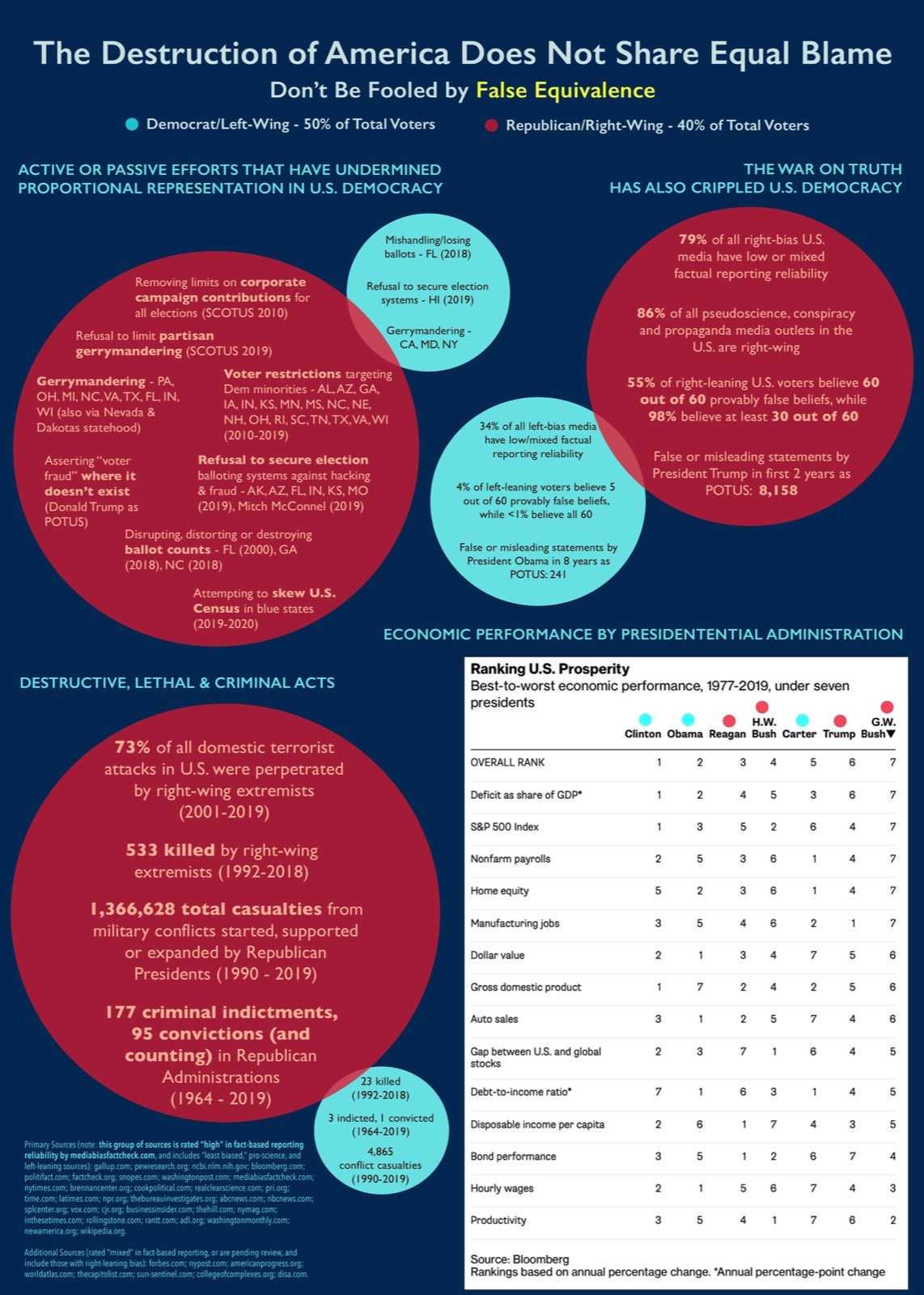
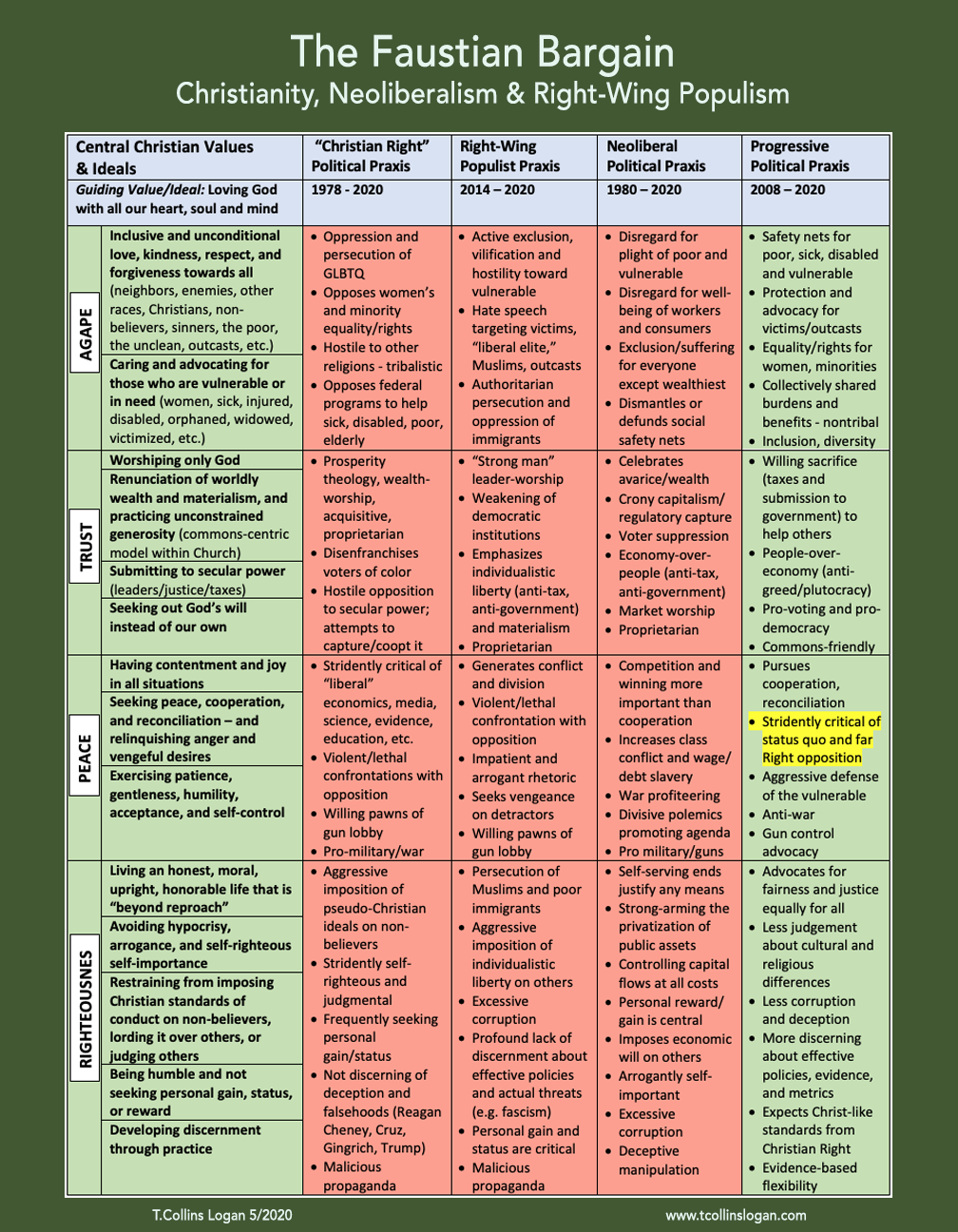

 Anti-immigrant policies and sentiment in the U.S.. This is actually one of the dumbest “let’s shoot ourselves in the foot” developments in American politics. Blaming immigrants for our problems isn’t just mistaken, it’s really harmful to the U.S. economy. Particularly in agriculture, the U.S. relies almost entirely on immigrant workers to keep Americans fed…and big ag really has never cared if those workers were legal or not. So when politicians amplify fear over a “crisis at the border” and enact policies that keep immigrants from supplying U.S. companies with much-needed cheap labor, guess who pays the price? American consumers of course.